
- Overview
The series “Tour d’horizon en trois questions” highlights research in all its forms and offers an informed perspective on current issues.
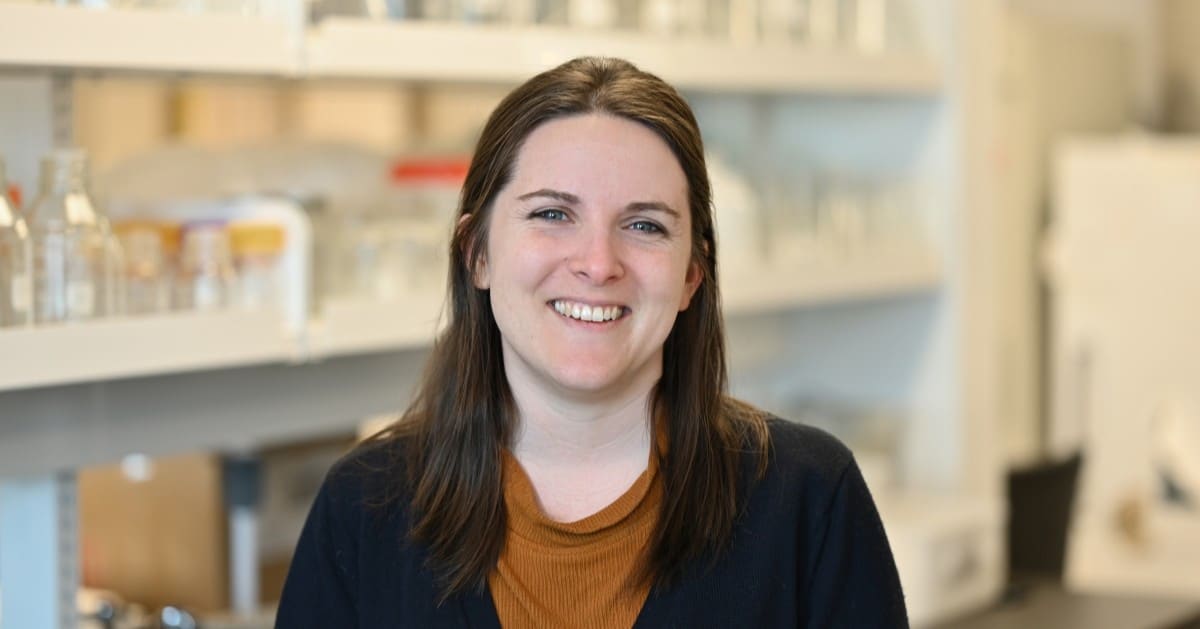
Geneviève Lajoie, professor at INRS
Invasive insects are an increasingly serious threat to agriculture worldwide. Wireworms, the European corn borer, and the Colorado potato beetle are among the most problematic insects for agricultural producers in Quebec. In 2020 alone, crop losses associated with invasive pests were estimated at as much as US$74 billion, according to the FAO. As climate change and global trade continue to facilitate their spread, developing sustainable solutions has become more urgent than ever.
Geneviève Lajoie, a professor at the Institut national de la recherche scientifique (INRS), studies the interactions between plants and the microorganisms that live alongside them. She explains how biological control could help better protect crops from emerging pests.
How have invasive insects become a threat to our crops and harvests?
One major consequence of climate change in North America is the northward shift of environmental conditions favorable to many plant, animal, and microbial species. As a result, species are moving their geographic ranges to remain within their historical climate niche. This creates new interactions among plants, insects, and fungi, increasing the risk that plants will be exposed to pests and pathogens with which they have not co-evolved.
The introduction of new invasive alien species through global trade further compounds these challenges, as their establishment is now facilitated by milder winters.
The emergence of outbreaks caused by new pathogens and pests is becoming a growing concern worldwide. These outbreaks threaten food security by causing direct crop losses while generating significant economic and environmental costs associated with pesticide use for pest control and chemical fertilizers used to compensate for reduced agricultural productivity. In addition to being costly, these chemicals are harmful to both local biodiversity and human health. An increasing number of studies, including research conducted at INRS, suggest that pesticides can act as endocrine disruptors and may potentially affect fertility.
There is therefore an urgent need to develop alternative approaches for managing emerging pests while reducing the use of synthetic fertilizers and pesticides.
What do these alternative solutions involve?
Our work focuses on what is known as biological control. In other words, we rely on living organisms rather than synthetic products to control pests and support crop health. We are particularly interested in using the plant microbiome to help crops cope with these challenges.
Just like humans, plants are covered by a diverse community of bacteria and fungi that help them stay healthy and adapt to their environment. On the one hand, this microbiome promotes plant growth by improving access to key nutrients such as nitrogen, phosphorus, and iron. On the other hand, it protects plants by forming a physical barrier against pathogenic microbes and by producing compounds that can inhibit their development.
The plant microbiome therefore acts as an invisible army, which we are now seeking to mobilize against emerging pests and pathogens.
Two main strategies can be used. First, environmental conditions can be modified to encourage plants to naturally recruit beneficial microorganisms. Second, beneficial microorganisms can be collected from natural environments, cultivated in large quantities in the laboratory, and then reintroduced to plants in greenhouse or field settings.
While this second approach offers a more direct way of managing plant microbiomes, it is often limited by compatibility issues between isolated microbial strains and the wide range of cultivars and plant species used in agriculture. A strain capable of controlling a wheat pathogen, for example, may not be effective against a pathogen affecting barley. One particularly important research objective is therefore to develop microbial consortia composed of several strains that can be effective across a broader range of agricultural contexts.
In practical terms, how does your research contribute to developing these types of solutions for insect invasions in agriculture?
Microorganism-based biological control solutions have mainly been studied for combating diseases caused by fungi. By contrast, their potential to protect plants against insect pests remains largely unexplored. Our goal is therefore to better understand how microbial communities associated with plants can enhance their resistance to emerging pests.
In our laboratory, we are currently using tomato plants as a model system. Through experiments conducted in growth chambers, we observe interactions between plants and various insect pests to identify microorganisms capable of stimulating plants’ natural defense mechanisms.
Our first results, currently under review for publication, show that the composition of the tomato microbiome changes rapidly following an insect attack. We observed, in particular, an increase in bacterial groups capable of fixing nitrogen, suggesting that plants may recruit microbial allies to support their defensive response. These findings strengthen the hypothesis that the microbiome is an important component of the plant immune system.
The next step is to isolate these microbial strains and evaluate their ability to protect crops while also promoting plant growth. Conducted in collaboration with the Montréal Botanical Garden, this project could lead to the development of new biocontrol tools for agricultural producers. Although our current work focuses on greenhouse-grown tomatoes, the knowledge generated could eventually be applied to many other crops.
Geneviève Lajoie is a professor at the INRS Centre Armand-Frappier Santé Biotechnologie Research Centre. Her research focuses on the ecology and evolution of plant-microbe interactions. She is also a member of the Centre SÈVE and the Quebec Network for Research in Sustainable Agriculture (RQRAD), and the Centre for Forest Research.