
Project description
Background
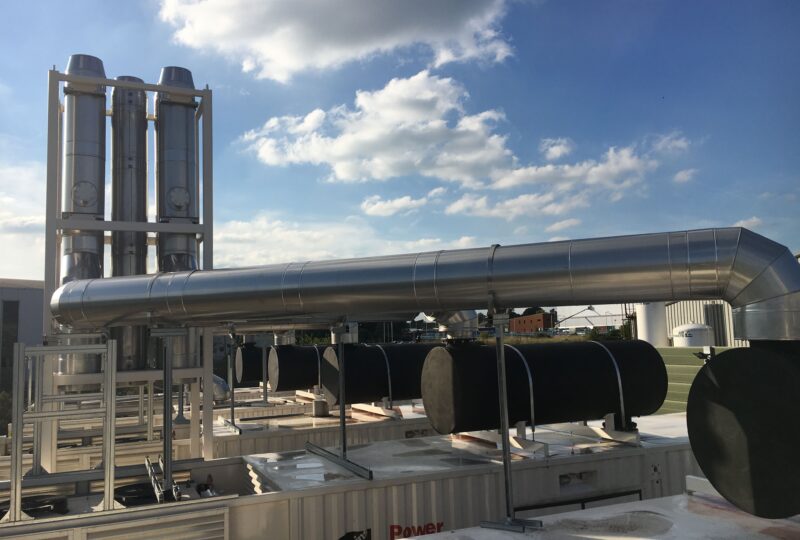
The recovery and utilization of industrial waste heat represent an important opportunity to improve industrial energy efficiency and reduce greenhouse gas emissions. In Québec, it is estimated that approximately 200 PJ of heat is rejected annually by the industrial sector. A portion of this energy could be recovered, converted, or otherwise utilized. However, identifying the most appropriate recovery strategies remains a complex challenge. The diversity of industrial processes, the varying characteristics of heat sources, and the potential interactions among different energy recovery technologies must be considered alongside economic, geographical, and continuous-operation constraints. At the territorial scale, the analysis also requires integrating data of very different types, which are often incomplete or uncertain, while accounting for the technical, economic, and geographical constraints specific to each configuration.
Although detailed process models can provide rigorous representations of these systems, their complexity and computational requirements limit their direct integration into large-scale energy optimization models. One of the key challenges is therefore to develop simplified representations that accurately reproduce process behaviour within their intended operating range while remaining computationally efficient enough to be integrated into multi-energy system models. The challenge lies in simplifying process models to enable their integration into larger-scale optimization frameworks without losing critical information that could influence the resulting decisions.
PhD project 1
The objective is to develop a methodology for the rigorous, simplified, and reusable representation of various energy processes and waste heat recovery technologies, facilitating their integration into multi-energy system models. The Port of Québec will serve as a case study to assess the potential development of an industrial energy hub.
Depending on the directions that emerge throughout the project, the research activities may include:
- Identifying industrial processes and promising waste heat recovery technologies
- Developing detailed models of selected processes and establishing a methodology for designing and validating reduced-order models and linearization approaches
- Conducting energy, environmental, and techno-economic assessments of the technologies investigated
- Preparing scientific publications and presenting research findings at national and/or international conferences
PhD project 2
The objective is to develop a territorial energy analysis methodology to characterize energy flows, identify and quantify synergies among industrial stakeholders, and assess the robustness of different waste heat recovery configurations. The Port of Québec will serve as a case study to assess its potential development as an industrial energy hub.
Research activities (non-exhaustive list):
- Define the spatial boundaries of the study and identify the main energy stakeholders within the territory
- Collect, structure, and process available data on energy consumption, waste heat, greenhouse gas emissions, and infrastructure
- Represent uncertainties associated with energy flows using scenarios, statistical distributions, or Monte Carlo approaches
- Analyze the robustness and sensitivity of the identified synergies
- Prepare scientific publications and present research findings at national and international conferences
Conditions
- Desired starting date: Winter/Summer 2027
- PhD scholarship: CAD 30,000/year for 3 years
- Supervision by an interdisciplinary team with expertise in process engineering, energy, and thermodynamics
- Excellent opportunity to develop practical skills and build a professional network, notably through its real-world application at the Port of Québec and the involvement of the industrial partner Abrafo Négajoule
Locations and study programs
Project 1: PhD in Earth Sciences, Eau Terre Environnement Research Centre, Institut national de la recherche scientifique (INRS) (Québec, Quebec, Canada)
Project 2: PhD in Mechanical Engineering, Université Laval (Québec, Quebec, Canada)
Research supervision
- Louis-César Pasquier, Professor, INRS
- Louis Gosselin, Professor, Université Laval
- Ilies Tebbiche, Research Associate, INRS
- Jean Rouleau, Research Professional, Université Laval
Required qualifications
Project 1
- Master’s degree, or equivalent qualification, in chemical engineering, energy engineering, mechanical engineering, or a related field
- Strong interest in process modelling, energy efficiency, and the energy transition
- Autonomy, curiosity, scientific rigour, and the ability to work effectively within an interdisciplinary team
- Strong analytical, scientific communication, and problem-solving skills
Project 2
- Master’s degree, or equivalent, in energy engineering, mechanical engineering, electrical engineering, or a related field.
- Strong interest in energy planning, the energy transition, and complex systems analysis.
- Autonomy, scientific rigour, and the ability to work within an interdisciplinary team.
- Strong analytical, data structuring, and scientific communication skills.
To apply
Please use the form below to submit your application, including the following documents in PDF:
- Complete CV
- Cover letter (maximum 2 pages)
- Complete academic transcripts (Master’s and Bachelor’s degrees)
- Contact information for two references
- Any relevant degree, document, or supporting material (e.g., publication, conference presentation, project, GitHub repository)