This agreement formalizes scientific collaborations between faculty members at both institutions and expands opportunities for international doctoral training.
What led to the formation of this partnership?

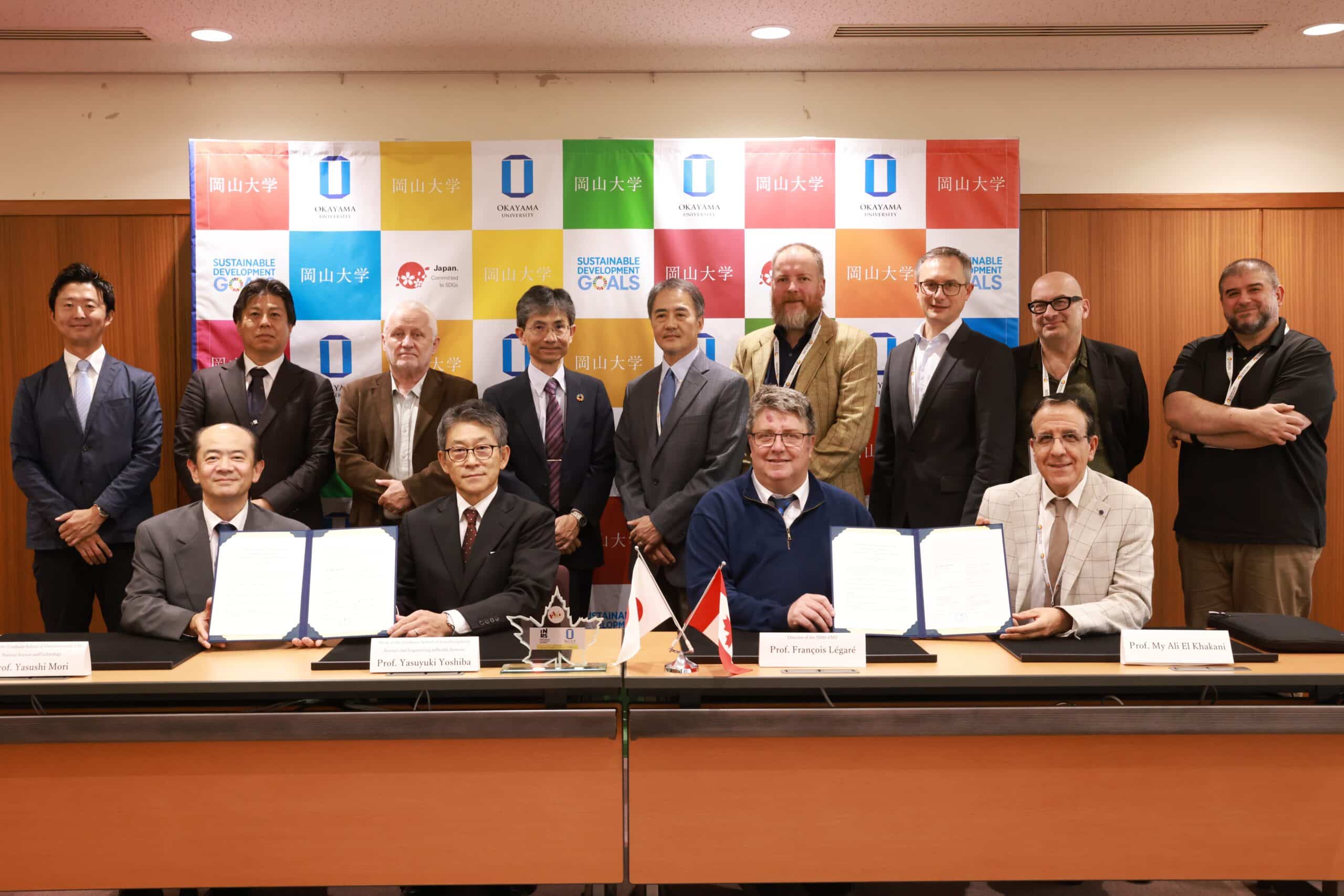
INRS and Okayama University in Japan have maintained collaborative ties since 2016, when the two institutions signed an initial framework agreement on scientific cooperation and student mobility. Building on mutual exchanges between researchers and students from both institutions, the collaboration naturally progressed to the next level, creating an official framework for the joint supervision of doctoral dissertations. This important milestone was reached with the signing of a framework agreement for joint thesis supervision on October 2026.

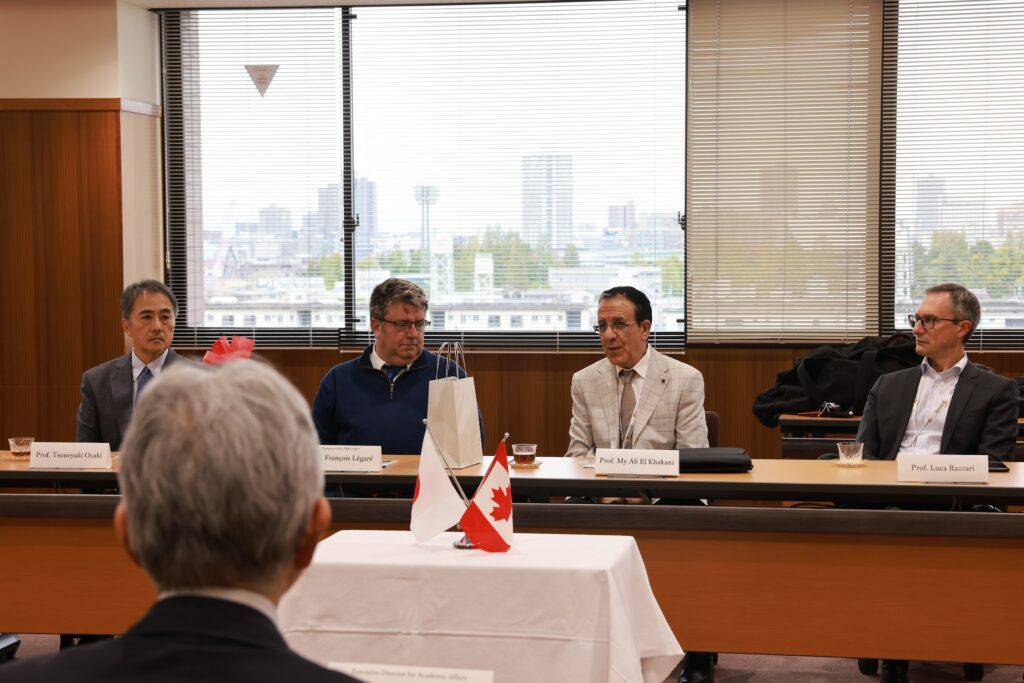
This initiative builds on the exchanges that began during an INRS institutional mission to Japan, with the support of the International Office. It was spearheaded in particular by Professor My Ali El Khakani, a specialist in nanostructured materials, and Professor Tsuneyki Ozaki, a specialist in THz science and technology, whose scientific collaborations with colleagues at Okayama University helped identify partnership opportunities.

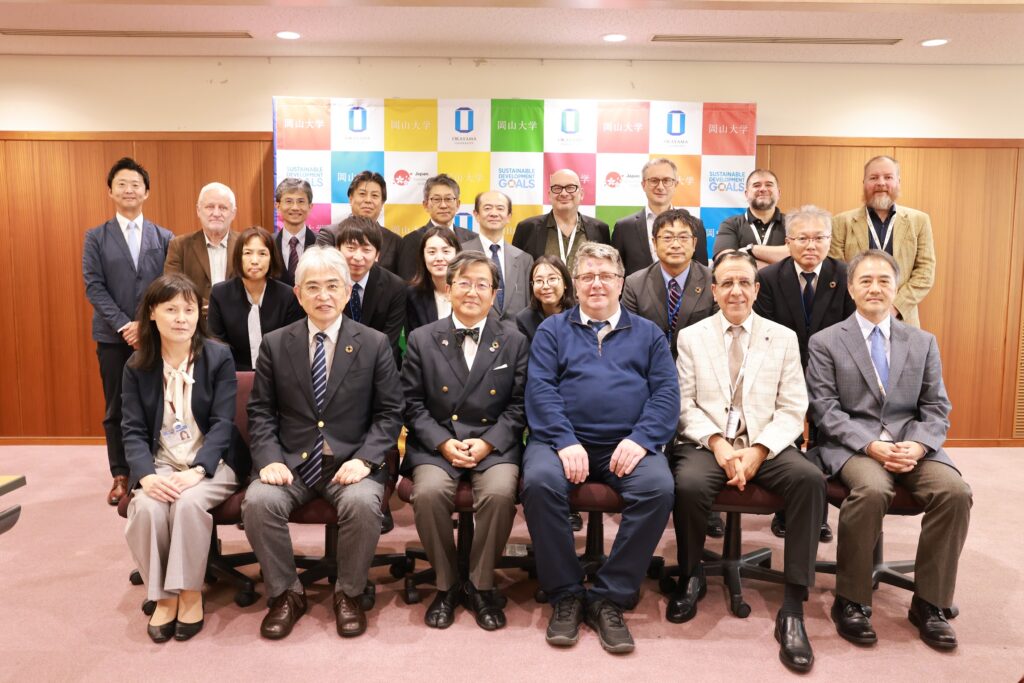
The official signing of the agreement took place at Okayama University, in the presence of members of its senior administration and INRS professors who were in Japan to attend the international conference Opto-X-Nano-2026i, co-organized by Professor El Khakani.

What is at the heart of the research conducted under this partnership?

While open to all fields of study at INRS, this agreement will initially enable the joint supervision of students who will divide their time between the two institutions in the fields of advanced materials and nanomaterials for energy applications (solar, batteries, photothermal), THz science and technology, the interaction of ultrafast lasers with matter, and photonics.

What is the impact of such a partnership on the INRS community?

This agreement paves the way for more structured collaboration through frequent exchanges between researchers, the joint organization of scientific workshops and international conferences alternating between Japan and Quebec, and coordinated joint funding applications. Doctoral students from both institutions will benefit from dual international research experience and an enriched educational experience through co-supervision and working in two different environments and cultures. Those trained under this program will serve as a vital link in strengthening future collaborative ties with a strategic partner such as Japan.