- Research
INRS and UQTR strengthen their joint research unit to develop more efficient, safer, and more sustainable batteries.
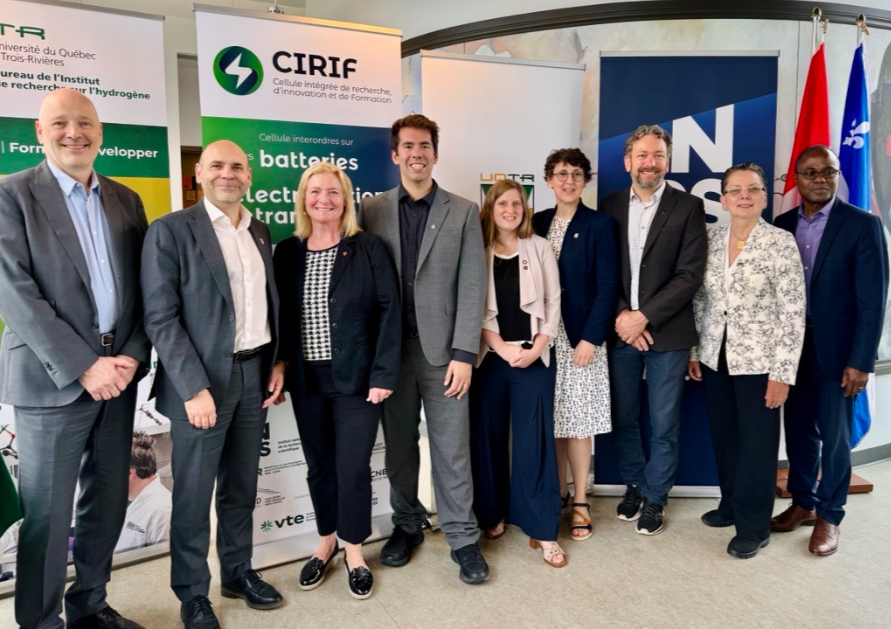
Québec is accelerating its energy transition. With a total investment of $2.88 million, the Institut national de la recherche scientifique (INRS) and the Université du Québec à Trois‑Rivières (UQTR) are combining their expertise to build new battery value chain capabilities vital to our energy sovereignty.
Creating closer ties between research and industry to accelerate innovation in the energy sector is the core mission of the new INRS‑UQTR Joint Research Unit (UMR) in Materials and Technologies for Energy Transition.
The announcement was made today at UQTR at a press conference attended by Sébastien Charles, UQTR Vice‑Rector for Research; Annick Girard, INRS Associate Scientific Director; regional elected officials as well as various UMR partners and members from industry and the research community
From lithium to power grids: solutions for the entire energy chain
The work by the INRS-UQTR UMR team, co-directed by INRS professor François Allard, spans the full spectrum of energy technologies and enjoys the support of the Natural Sciences and Engineering Research Council of Canada (NSERC), Québec’s Ministère de l’Économie, de l’Innovation et de l’Énergie (MEIE) through the Consortium de recherche et d’innovation en transformation métallique (CRITM), and partners such as Hydro‑Québec, Mitacs, and Arkema Canada Inc.,
The teams are tackling key challenges in lithium extraction and recycling, next‑generation battery development, and the integration of these technologies into electrical grids, with the goal of improving system performance, securing critical resources, and reducing environmental impact.
“These projects will spark key advances in the development of safer, higher‑performance, and more durable batteries while improving our understanding of materials, critical‑mineral processing methods, and next‑generation energy systems. For example, they will lead to innovations in lithium extraction and recycling processes—an essential challenge—by making them more efficient and better adapted to Canadian industrial realities.”
François Allard, INRS Professor and Co‑director of the INRS–UQTR Joint Research Unit
Alongside François Allard, two projects are co‑led within the UMR by UQTR researchers. Professor Samaneh Shahgaldi, Canada Research Chair in Lignin‑Based Fuel Cells and member of UQTR’s Hydrogen Research Institute (IRH), brings her expertise in polymer materials and electrolytes to the development of high‑performance all‑solid‑state lithium‑metal batteries. Professor Kodjo Agbossou, Director of UQTR’s School of Engineering and holder of the Hydro‑Québec Research Chair in Transactional Management of Residential Power and Energy Demand, contributes his recognized expertise in the integration of electricity-production, storage, and management systems to research on solid oxide fuel cells for grid applications.
A first Canada Research Chair
The UMR has reached a major milestone with the awarding of its first Canada Research Chair in New Energy Materials to INRS professor Karin Kleiner, a member of the INRS‑UQTR UMR. This Tier 2 Chair, granted to emerging researchers poised to become leaders in their field, is funded by NSERC in the amount of $600,000 over five years.
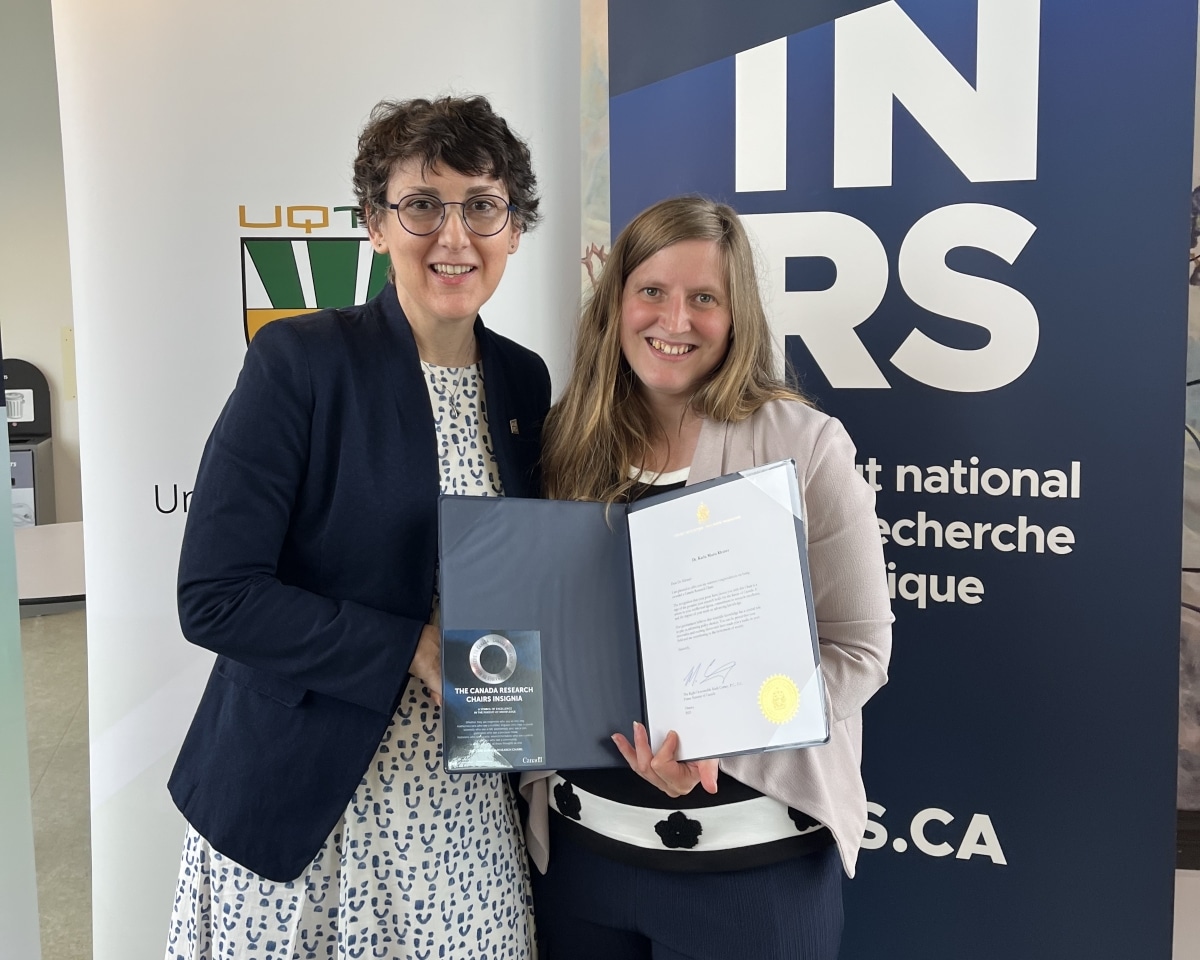
“This chair represents a unique opportunity to advance the development of next‑generation energy materials. By pushing current boundaries, we aim to improve performance, extend lifespan, and design solutions that rely on a more efficient use of scarce natural resources. Our ambition is to contribute to technologies that are more sustainable, more efficient, and better suited to today’s energy and environmental challenges.”
Karin Kleiner, INRS Professor, Member of the INRS–UQTR Joint Research Unit, and Canada Research Chair in Next‑Generation Energy Material
This Chair will enable Professor Kleiner to develop next‑generation energy materials incorporating Canadian minerals (iron, nickel and lithium) that are high‑performing and essential to advancing energy storage and conversion technologies and reducing greenhouse gas emissions.
Strategic advantages for Québec
With this first Chair and by major new high-impact projects, INRS and UQTR are strengthening their leadership in energy technologies. Together, they are helping position Québec at the heart of the battery sector—a strategic industry for the province’s technological and energy sovereignty—while generating significant benefits for research, the economy, and regional development.
Funded Projects
- Innovative Processes for Lithium Extraction and Li‑ion Battery Recycling NSERC Alliance – $1,165,812 including $278,361 (including FIR) from CRITM supported by MEIE (François Allard, Louis‑César Pasquier – INRS)
- Stabilizing Lithium Metal with Polymer Electrolytes for High‑Performance All‑Solid‑State Batteries NSERC Alliance – $690,000 (François Allard – INRS, Samaneh Shahgaldi – UQTR)
- Multiscale Simulation of Solid Oxide Fuel Cells for Power Grid Applications NSERC Alliance, Mitacs, Hydro‑Québec – $445,000 (François Allard – INRS, Kodjo Agbossou – UQTR)
“This strategic investment demonstrates just how essential collaborative research is to the energy transition. By bringing together complementary expertise within this Joint Research Unit led by INRS, we are developing concrete solutions with UQTR that will meet tomorrow’s energy needs and generate significant benefits for Québec and Canada »
Luc-Alain Giraldeau, Chief Executive Officer, INRS
The INRS–UQTR Joint Research Unit is a real stimulus for our community: it is adding capabilities, attracting key research chairs, and sparking projects that otherwise could never have emerged. The funding announced today—three NSERC Alliance projects and a first Canada Research Chair—confirms the value and importance of this model. UQTR is proud to contribute to it alongside INRS and committed industry partners and glad to leverage its recognized expertise in energy materials and electrical systems integration.”
Sébastien Charles, Vice‑Rector for Research, UQTR