
- Overview
The “Three Questions” series highlights research in all its forms and sheds light on current issues through the expertise of INRS researchers.

Professor Eva Enders, specializes in freshwater fish ecology and biodiversity conservation
Freshwater fish are at the heart of Quebec’s ecosystems, traditions, and many economic activities. For millennia, they have supported the food systems, cultural practices, and spiritual traditions of Indigenous Peoples. Today, however, the combined effects of climate warming and human pressures are increasingly threatening fish populations.
To better protect these species and the ecosystems they depend on, researchers are developing new tools to anticipate the impacts of environmental change and guide conservation efforts.
Eva Enders, a professor at the Institut national de la recherche scientifique (INRS), specializes in freshwater fish ecology and biodiversity conservation. Her research focuses on the effects of environmental change and human activities on aquatic ecosystems. She is the scientific director of the Research in Fluvial Fish Ecology Laboratory (RIFFLE) and a researcher at the INRS Eau Terre Environnement Research Centre. She also contributes, alongside other freshwater fish specialists, to the work of the Committee on the Status of Endangered Wildlife in Canada (COSEWIC).
Professor Enders discusses the challenges facing Quebec’s freshwater fish populations and the solutions that can help ensure their long-term conservation.
What effects is climate change having on freshwater fish habitats?
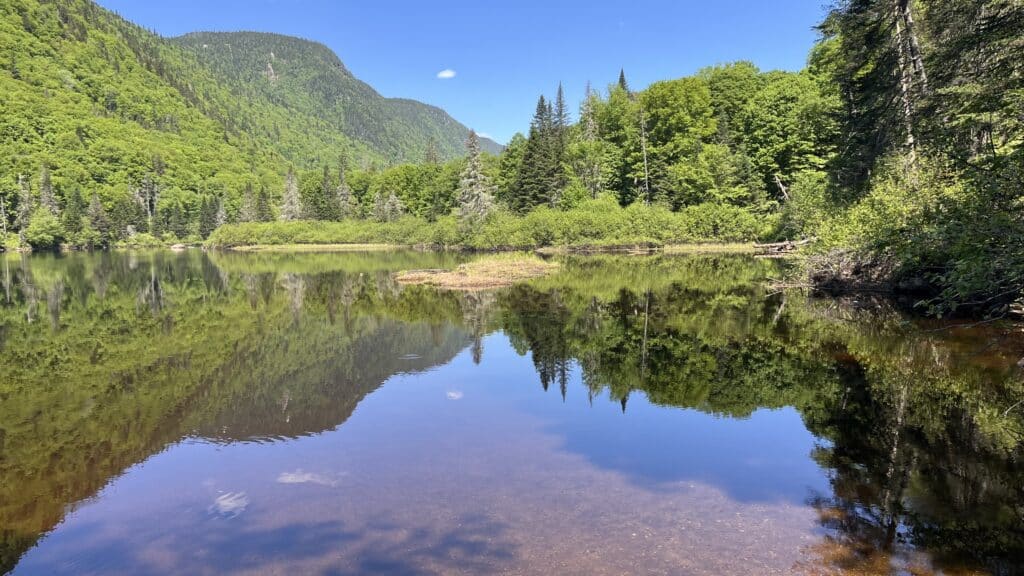
Climate change is gradually altering the environmental conditions to which freshwater fish are adapted. These changes are becoming increasingly evident in fish habitats. One of the most noticeable is the increase in water temperature. For example, measurements collected over the past 25 years in the Jacques-Cartier River show that water temperatures have risen by approximately 2 degrees Celsius.
We are also observing changes in river flow, which may decrease during droughts or increase following heavy rainfall events. Reduced ice cover and the growing frequency of extreme weather events, which contribute among other things to riverbank erosion, are creating new sources of stress for many species.
Importantly, these changes do not act independently. They have what is known as a cumulative effect, meaning that when they occur simultaneously, they create even greater stress on aquatic organisms.
In addition to climate change, fish habitats are subject to other pressures, many of them linked to human activity, including pollution, the spread of invasive aquatic species, hydraulic infrastructure, and land-use practices that affect river health and connectivity.
Because fish depend closely on their environment to feed, reproduce, and carry out essential life functions, these changes can accelerate the decline of certain populations.
More specifically, how do these disturbances affect fish survival, growth, and distribution?
Freshwater fish are constantly exposed to environmental variability. They can adjust their movements, feeding behaviour, and habitat use to cope with changing conditions, but this capacity for adaptation has limits.
Tolerance thresholds to multiple stressors vary according to species and life stage. When physiological limits are exceeded, fish must devote more energy to survival, often at the expense of growth and reproduction. Responses therefore differ among species according to their physiological characteristics.
For example, fish may shift their distribution to find more favourable living conditions. Some species move northward or seek colder habitats, while others experience range contractions as suitable habitat becomes scarcer. Competition can also emerge between species that previously did not interact, as they compete for habitat or increasingly limited food resources.
Cold-water species such as the brook trout are particularly sensitive to warming rivers and streams. In the Jacques-Cartier River, one of our studies showed that the fallfish, another native species that is better adapted to warmer conditions, has expanded its distribution range.
As a result, slower juvenile growth, reduced reproductive success, and increased mortality can lead to local population declines and alter species distribution across watersheds.
How can we promote effective habitat restoration and the long-term conservation of species in a changing environment?
Research in ecophysiology and behavioural ecology conducted at INRS helps us better understand how fish adapt to environmental change and identify the thresholds beyond which populations become vulnerable. This knowledge is essential for anticipating environmental impacts, protecting critical habitats, and maintaining viable populations over the long term.
To act effectively, fisheries managers need tools that can predict the impacts of climate change and human activities in order to identify the most beneficial conservation and restoration actions.
With this objective in mind, my laboratory develops decision-support tools. One example is CEMPRA (Cumulative Effects Model for Prioritizing Recovery Actions) for Atlantic salmon, funded by the Quebec Foundation for Biodiversity and Wildlife. The model evaluates the cumulative effects of climate change and human activities to estimate risks facing Atlantic salmon populations and prioritize conservation actions at the watershed scale.
We are also developing, with support from the Foundation for Conservation of Atlantic Salmon (FCAS) , a bioenergetics model that quantifies the influence of factors such as temperature and food availability on the growth and survival of juvenile salmon. This approach helps predict how the quality of aquatic environments may change under different climate scenarios.
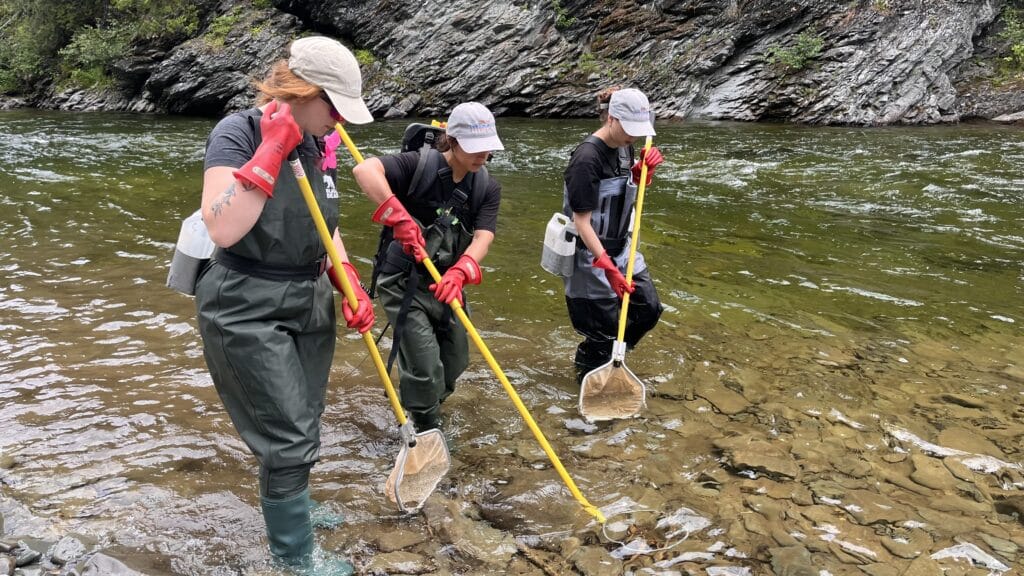
Through my research, I hope to contribute to slowing biodiversity loss through species conservation, habitat restoration, and the sustainable management of aquatic ecosystems. By combining field observations, long-term monitoring, and modelling, we provide managers with practical knowledge to adapt their actions to future conditions. My team works closely with government agencies, conservation organizations, and natural resource managers to support adaptive fisheries management in a rapidly changing environment.
Freshwater fish biodiversity is an ecological, cultural, and economic asset of immense value. Conserving it means protecting not only aquatic ecosystems, but also the benefits they provide to present and future generations.