
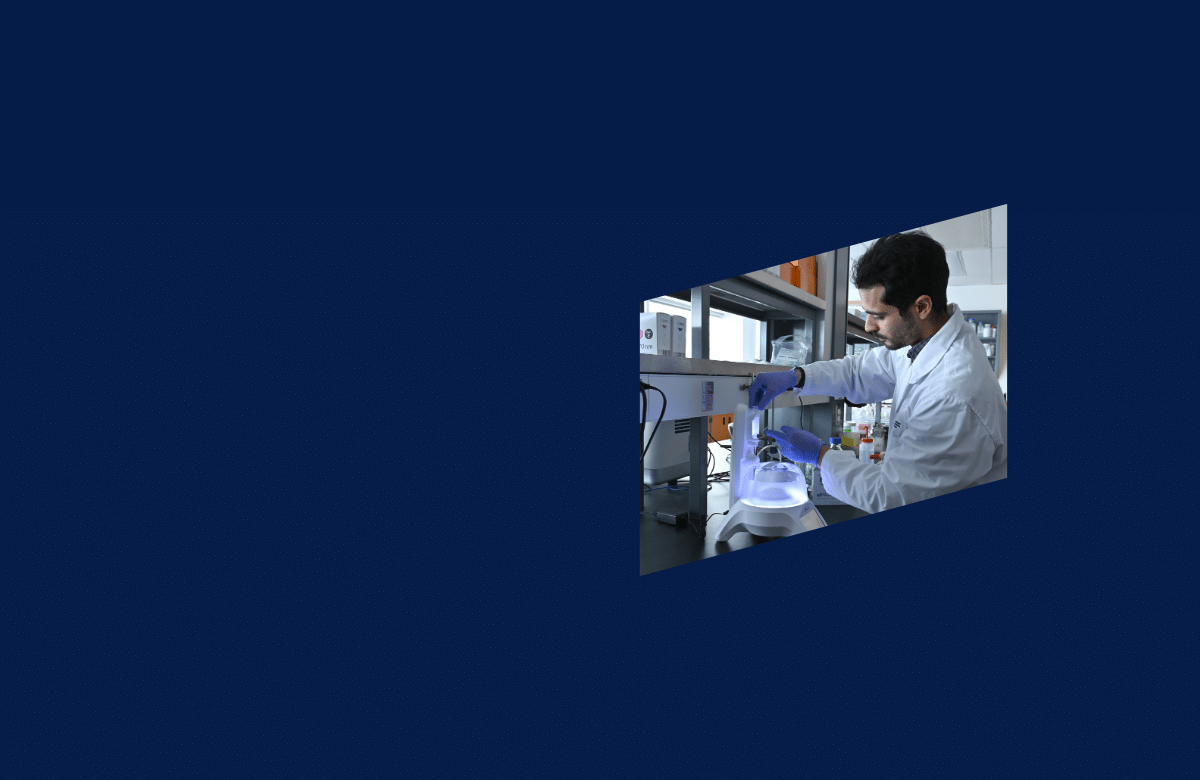
Louise and André Charron Research Chair on Alzheimer’s Disease from the Fondation Armand-Frappier
Why is it important?
Alzheimer’s disease currently affects more than 50 million people worldwide, and this number is expected to continue rising over the coming decades. The disease often progresses silently for many years before the first symptoms appear. By the time a diagnosis is made, a significant portion of the brain cells involved in cognitive functions has already been damaged. It is therefore essential to detect the disease as early as possible, ideally before significant brain damage occurs, to enable timely intervention and potentially slow or prevent disease progression.
What major question is the chair exploring?
Can Alzheimer’s disease be detected before the clinical onset, and can we develop innovative strategies to efficiently prevent and treat the disease?
The chair pursues two complementary objectives. The first is to identify peripheral early-stage blood biomarkers capable of detecting the biological changes associated with the disease before its clinical onset. The second is to develop innovative therapeutic approaches, particularly using nanotechnology and extracellular vesicles, to improve the delivery of drugs to the brain. These approaches could make it possible to target affected brain cells and regions more effectively, while limiting dosages and side effects.
What makes this chair unique?
The chair stands out for its integrated approach, which combines prevention, early detection, and the development of new therapeutic strategies. It studies Alzheimer’s from multiple angles, including the role of infections, inflammation, oxidative stress, and interactions between the brain and peripheral systems.
Through national and international collaborations and the study of cohorts comprising healthy individuals, those at risk, those in preclinical stages, and those at various stages of the disease, the chair seeks to better understand how the disease begins and how it progresses.
How will its findings be used?
The chair’s research could help detect Alzheimer’s earlier and more accessibly by identifying blood biomarkers associated with the earliest changes of the disease. An earlier diagnosis could eventually allow for intervention at a time when brain function is still preserved.
This research could also contribute to the development of more targeted treatments, particularly by improving the ability of medications to reach the brain. Ultimately, the goal is to better prevent or slow the progression of the disease and improve the quality of life for those affected.
What’s next?
The team hopes to continue identifying early biological signatures that can track the disease’s progression and identify individuals at risk. At the same time, it will develop new therapeutic strategies—particularly those based on nanotechnologies and extracellular vesicles—to facilitate more precise delivery of treatments to the brain.
The ultimate goal is to intervene earlier, before brain damage becomes irreversible, and to contribute to the development of a more preventive and personalized approach to treating Alzheimer’s disease.
Chairholder

Charles Ramassamy
Professor and expert in Toxins and Antioxidants and Alzheimer’s Disease
Centre Armand-Frappier Santé Biotechnologie
This philanthropic research chair was made possible through the generous support of the Fondation Armand-Frappierwhich actively contributes to advancing research and training the next generation of researchers.