
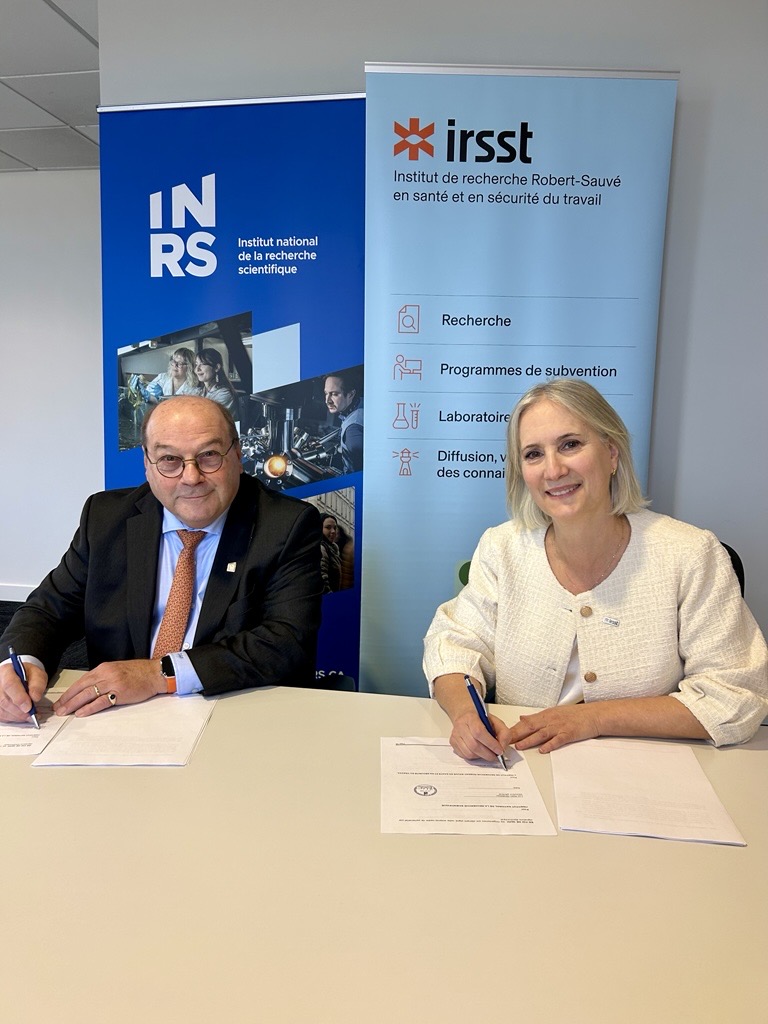
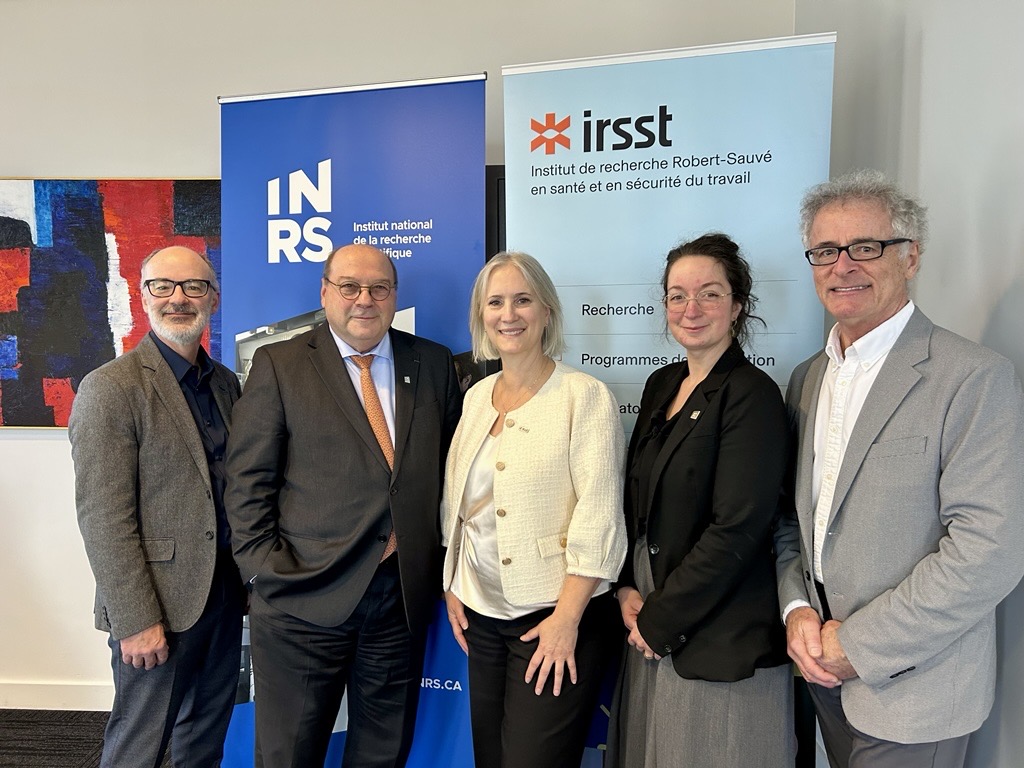
The Institut national de la recherche scientifique (INRS) and the Institut de recherche Robert-Sauvé en santé et en sécurité du travail (IRSST) have signed a framework agreement aimed at strengthening their scientific collaboration. This partnership aims to foster exchanges between teams, bring their expertise together, and support the development of new knowledge for the benefit of workplaces.
What led to the creation of this partnership?

The INRS and the IRSST share a common interest in advancing knowledge in occupational health and safety. Their complementary areas of expertise provide fertile ground for scientific collaboration. The framework agreement formalizes this commitment to working more closely together and creating opportunities for lasting collaboration.

In terms of resources, what form does this partnership take?

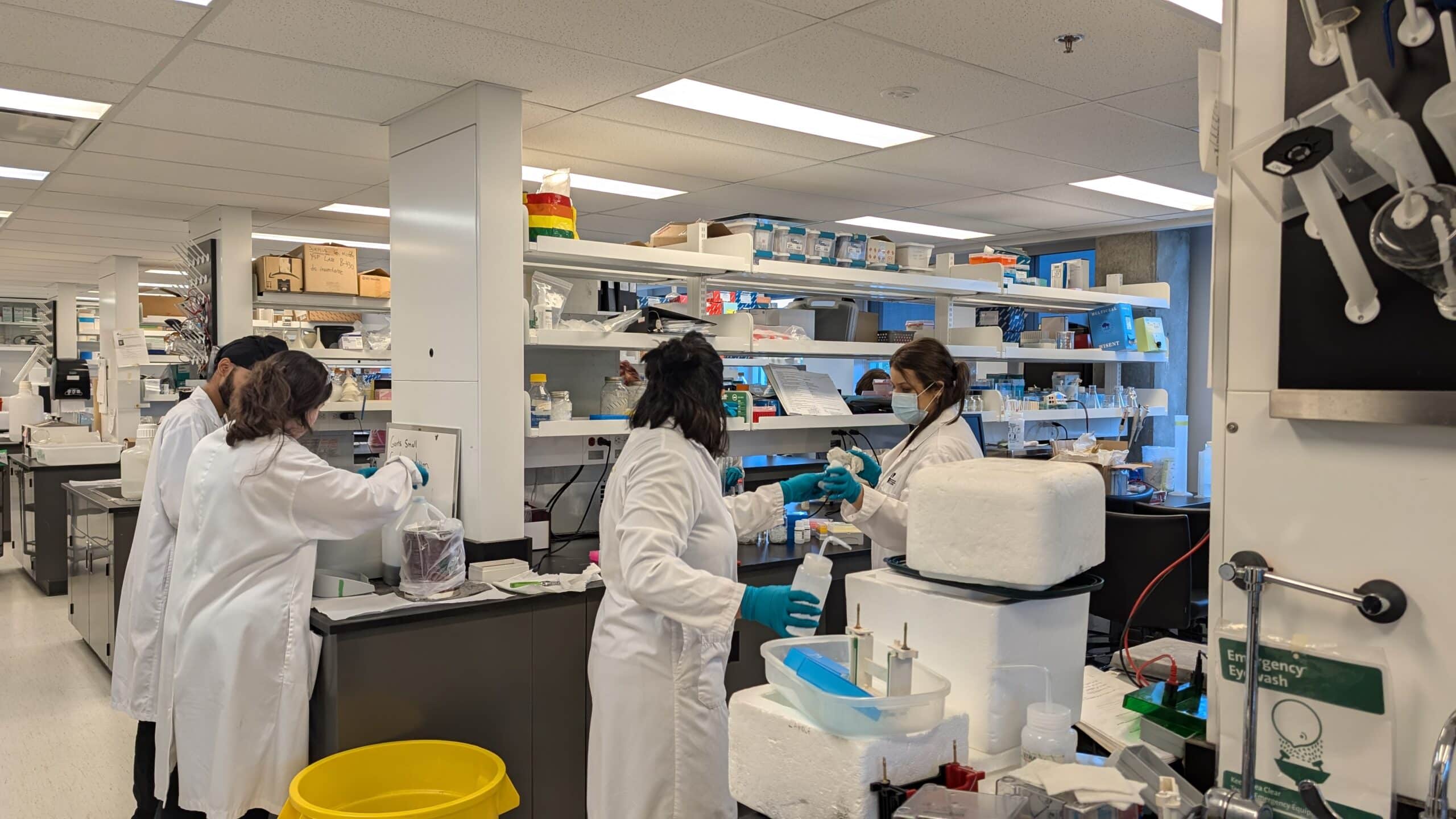
The agreement will enable both organizations to mobilize their teams and scientific resources—including their research laboratories—around joint initiatives. Specifically, it provides for the conduct of joint research projects, the production of scientific publications, the co-supervision of graduate students, and knowledge transfer activities.

What is at the heart of the research conducted under this partnership?

The research will fall within the broad field of occupational health and safety. By combining their expertise, the teams will be able to deepen their understanding of the challenges facing workplaces and contribute to the development of knowledge and solutions tailored to their needs.

For the INRS, what is the added value of partnering with the IRSST?

This partnership allows the INRS to strengthen its collaborations with a key player in occupational health and safety research in Quebec. It also opens the door to new opportunities for interdisciplinary research, increased sharing of expertise, and enriching training opportunities for the next generation of scientists. 
What is the impact of such a partnership on the INRS community?

This collaboration offers new opportunities for faculty and research teams, particularly by fostering interdisciplinary projects and the development of collaborations with the IRSST. It also opens up enriching training and mentorship opportunities for the next generation of scientists, notably through co-supervision at the graduate level. On a broader scale, it will help bridge the gap between academic research and the realities and needs of the workplace.