
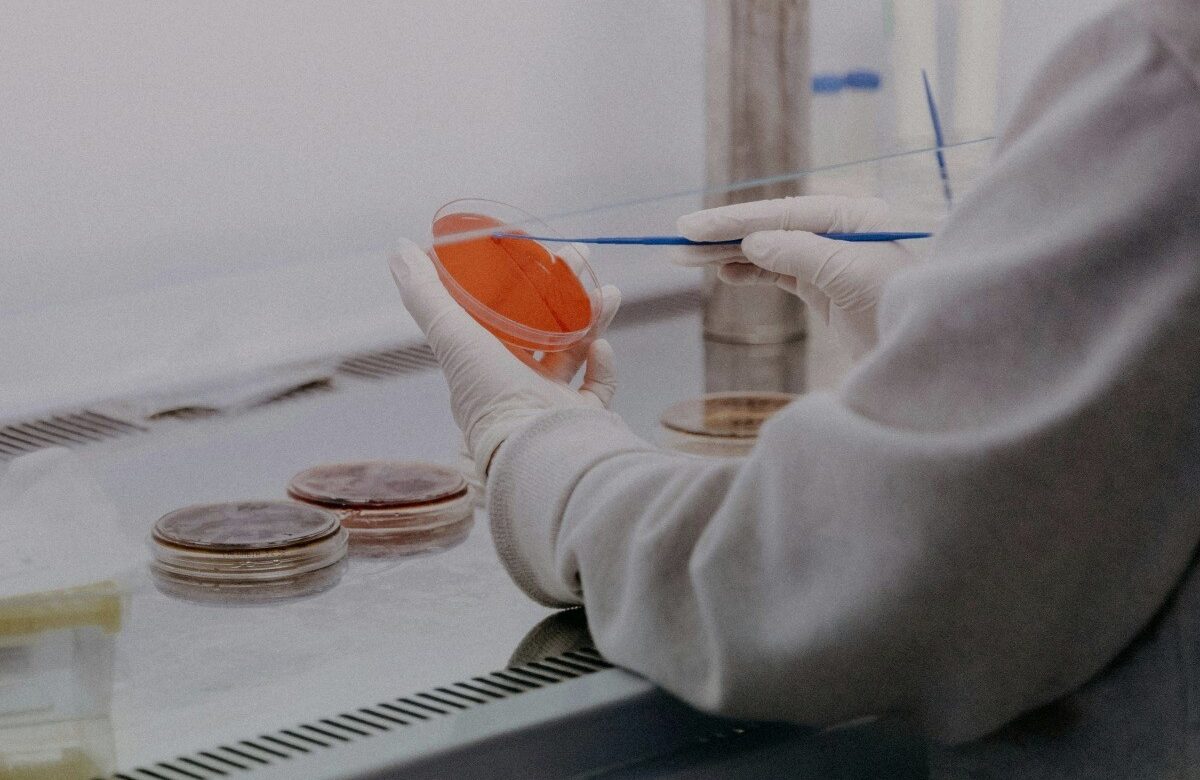
Breast cancer is the most common cancer among women in Canada. Despite advances in screening and treatment, it remains one of the leading causes of cancer-related deaths among Canadian women. A cause for concern is that the majority of cases—between 70% and 90%—are believed to be linked to environmental and lifestyle factors.
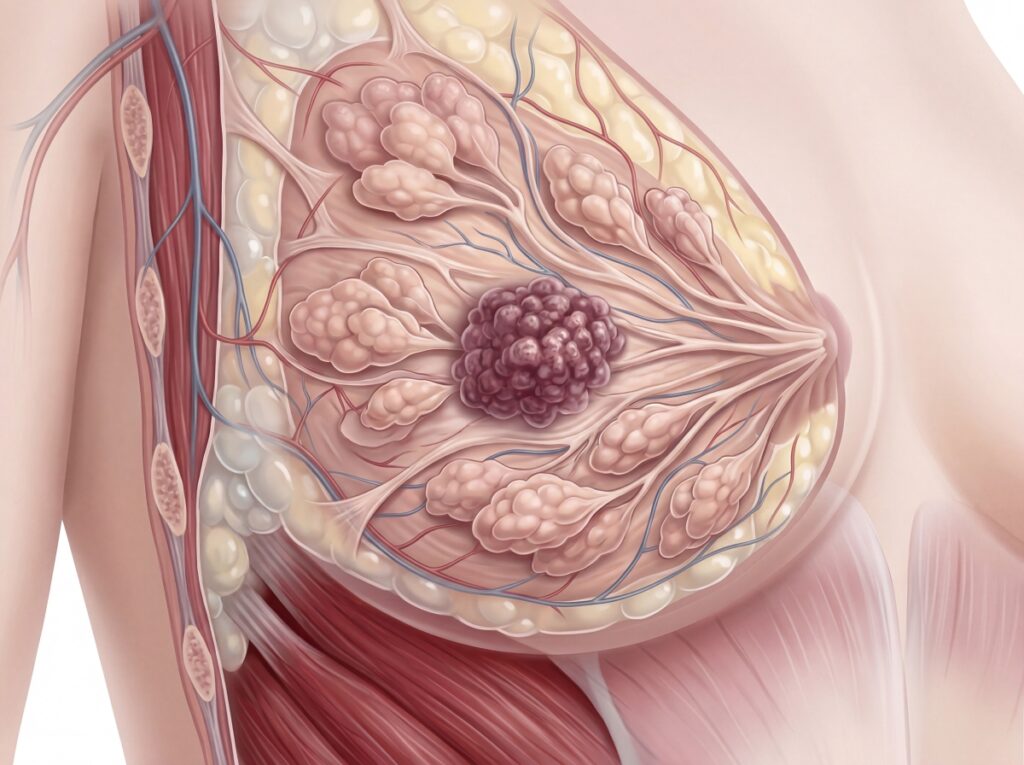

A growing body of research shows that certain pollutants in our environment may contribute to the development of breast cancer. Among them, endocrine disruptors are attracting increasing attention. These chemicals can disrupt the hormonal system, which is essential for many bodily functions. The mammary gland, whose development is highly dependent on hormones, is particularly sensitive to them. These substances are ubiquitous in everyday life: cosmetics, household products, plastics, food packaging, and more. This exposure raises important questions: How do they affect our bodies? Can they influence breast development or increase the risk of cancer? Are some people more vulnerable than others?
Our research program seeks to answer these questions by studying both the normal development of the mammary glands and the effects of environmental chemicals that may disrupt it. Using laboratory models, we analyze how these exposures may affect breast health at different stages of life. The results of this research will provide a better understanding of the links between the environment and breast cancer and allow for a more accurate assessment of the risks associated with substances present in our daily lives. Ultimately, they will help guide prevention efforts and public health decisions.
Holder
Isabelle Plante, professor
- Holder of the INRS Chair on Endocrine Disruptors and Mammary Glands : From Mechanisms of Action to Toxicological Risks

Background
In many countries, breast cancer is the leading cause of cancer-related deaths among women. Although the causes are varied and generally unknown, it is widely accepted that 70 to 90 percent of all cancers are linked to dietary, behavioral, and environmental factors. Furthermore, a general decrease in the age of thelarche (breast development) has been observed worldwide, without a corresponding reduction in the age at menarche (first menstruation), suggesting a hormonal imbalance between the ovaries and the breast. A significant number of women also experience delayed or impaired lactation, often for reasons that remain unclear; however, developmental abnormalities or hormonal imbalances have been proposed as possible causes. Interestingly, exposure to endocrine-disrupting compounds (EDCs) has been associated with all of these conditions. EDs are exogenous substances or mixtures that disrupt the functioning of the endocrine system and consequently cause adverse effects on (sub)populations of healthy organisms, as well as potentially on offspring across multiple generations. EDs are present in everyday products—cosmetics, electronic devices, pesticides, food and beverage containers, and plastic items. Although all individuals are continuously exposed to EDs from multiple sources, certain populations experience disproportionately higher exposure due to occupational factors, lifestyles, residential environments, or other determinants—leading to inequalities in exposure commonly referred to as environmental injustice. Furthermore, sensitivity to EDCs varies by organ—with those whose development depends on hormones being more sensitive—as well as throughout the life course. Thus, pregnancy is considered a sensitive period for both the mother and the developing fetus, due to the immense molecular, cellular, metabolic, and hormonal changes that occur during this time. Given the hormonal sensitivity of the mammary gland, it is often considered a sentinel organ for assessing environmental exposure to EDs.
Objectives
Our research program consists of two complementary themes:
- A basic research component aimed at understanding the mechanisms that govern mammary gland development—specifically, the role of intercellular communication and interactions in this process—and at determining how their dysregulation contributes to breast diseases.
- A toxicology research component aimed at determining the effects of pollutants—particularly endocrine disruptors—on the development and function of the mammary glands.
Partners and Collaborators
- Kessen Patten (INRS)
- Géraldine Delbès (INRS)
- François Légaré (INRS)
- Martin Pelletier (Université Laval)
- Étienne Audet-Walsh (Université Laval)
- Mauro Silva (Université Laval)
- Catherine Mounier (UQAM)
- Johanne Saint-Charles (UQAM)
- Mathieu Philibert (UQAM)
- Anne Marie Gannon (Santé Canada)
- Yonglai Feng (Santé Canada)
- Mike Wade (Santé Canada)
- Carlos Reyes-Moreno (UQTR)
- Bernard Robaire (McGill)
- Barbara Hales (McGill)
- Marion Zammit (University of Malta)
- Sandeep Raha (McMaster University)