- Awards and Distinctions
Recognition for research transforming biodiversity monitoring and supporting public decision-making in Quebec.
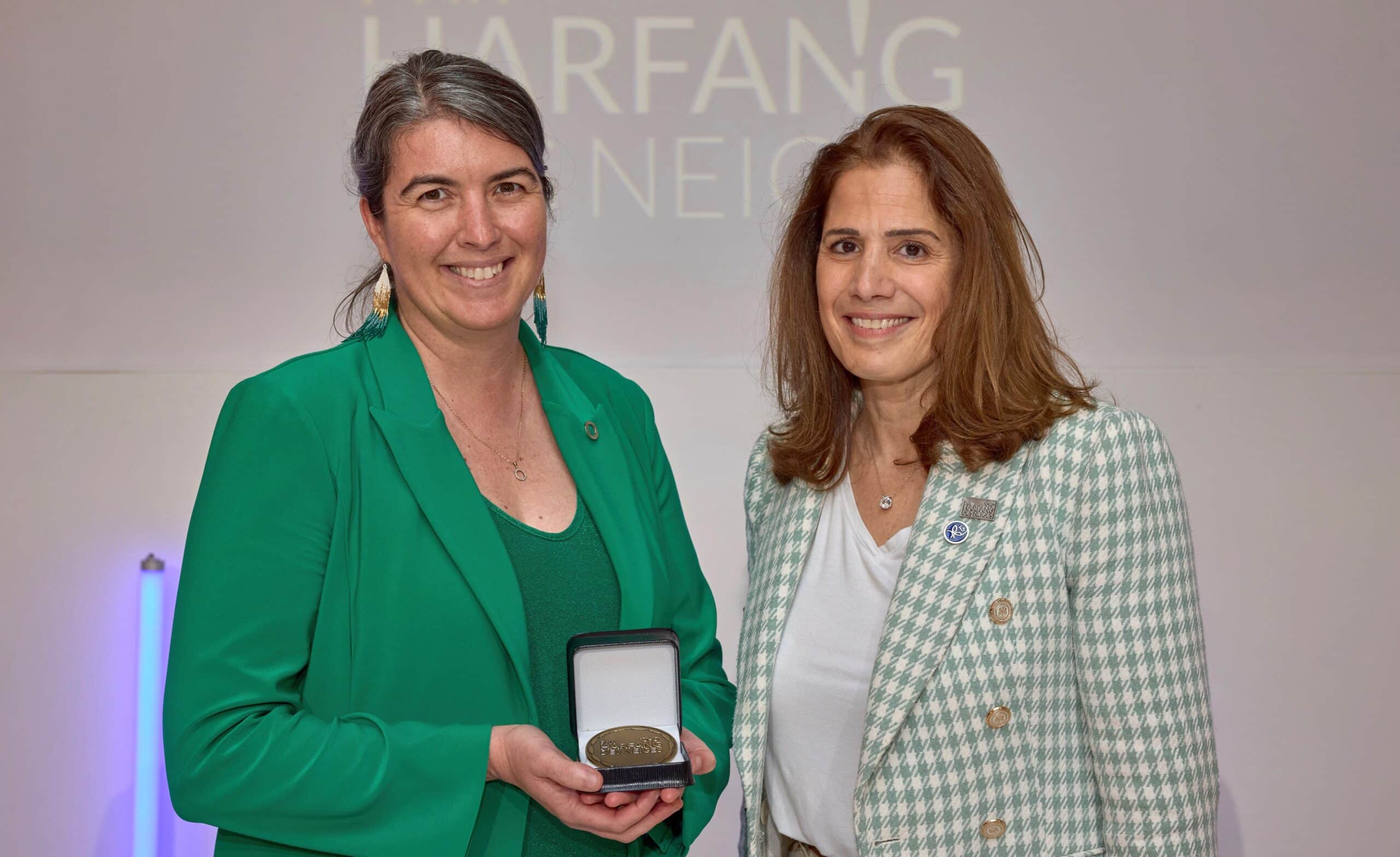
Photo: Valérie S. Langlois, professor at INRS and recipient of the 2026 Harfang des neiges Award, with Pascale Déry, Minister of the Environment, Climate Change, Wildlife, and Parks. Photo credit: Pat Lachance
An internationally recognized scientist and expert in environmental DNA (eDNA) at the Institut national de la recherche scientifique (INRS), Professor Valérie S. Langlois received the 2026 Harfang des neiges Award in the Contribution scientifique et technologique à la faune category at a ceremony held at the National Assembly of Quebec on June 4.
Presented by Pascale Déry, Quebec’s Minister of the Environment, the Fight Against Climate Change, Wildlife and Parks, the award highlights the significant impact of Professor Langlois’s work on the development and deployment of environmental DNA.
“This Harfang des neiges Award highlights the exceptional work of my entire research team, which is dedicated to advancing knowledge in environmental DNA, ecotoxicology, and ecotoxicogenomics. Through our research, we strive to align science with the real needs of society and decision-makers, in order to contribute to better biodiversity protection, here in Quebec and beyond.”
Valérie S. Langlois, Professor at INRS and Canada Research Chair in Ecotoxicogenomics and Endocrine Disruption (Tier 1)
This cutting-edge technology, which detects the presence of species from genetic traces left in the environment (such as skin cells, mucus, and excrement), enables non-invasive wildlife monitoring. It offers a more efficient and less disruptive way to analyze and monitor biodiversity.
Research Transforming Biodiversity Monitoring
Professor Langlois plays a key role in several large-scale initiatives based on this innovative approach. As co-director of the pan-Canadian iTrackDNA project, she has helped mobilize more than 80 partners, now equipped to independently conduct eDNA-based monitoring.
Her collaborative work notably led to the development of the first global standard for quantifying eDNA using real-time PCR, now integrated into certain protocols of Quebec’s Ministry of the Environment.
In addition to sequencing hundreds of mitogenomes (DNA found in mitochondria) to identify new species in Canada, her team has developed standardized tools to monitor more than 125 species, strengthening large-scale biodiversity monitoring and supporting public decision-making.
More recently, Professor Langlois, based at INRS’s Centre Eau Terre Environnement, founded the Quebec Environmental DNA Table (TAQ). This platform brings together scientists, public decision-makers, and communities, and aims to provide standardized protocols, develop training tools, and foster knowledge sharing.
A Mobilizing Leadership
Professor Langlois’s leadership is reflected in her ability to bring together a diverse network of partners, including governments, municipalities, and Indigenous communities, to accelerate the integration of eDNA-based tools into wildlife monitoring.
Her work combines scientific innovation with practical applications, notably through the development of technologies such as eDNA sampling drones, transferred to four First Nations to strengthen their autonomy in biodiversity monitoring.
By helping to structure a rapidly emerging field, Professor Langlois is actively transforming wildlife management practices and improving decision-making for ecosystem protection.
Established in 2018, the Harfang des neiges Awards recognize individuals and organizations that make outstanding contributions to wildlife conservation, management, and enhancement in Quebec.
Further reading
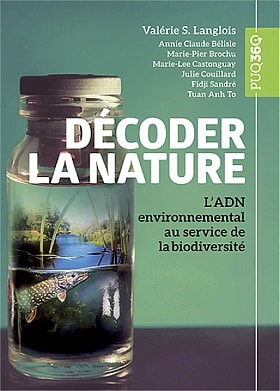
Professor Langlois and her team present environmental DNA to a broader audience in the book Decoding Nature, recently published by Presses de l’Université du Québec.