
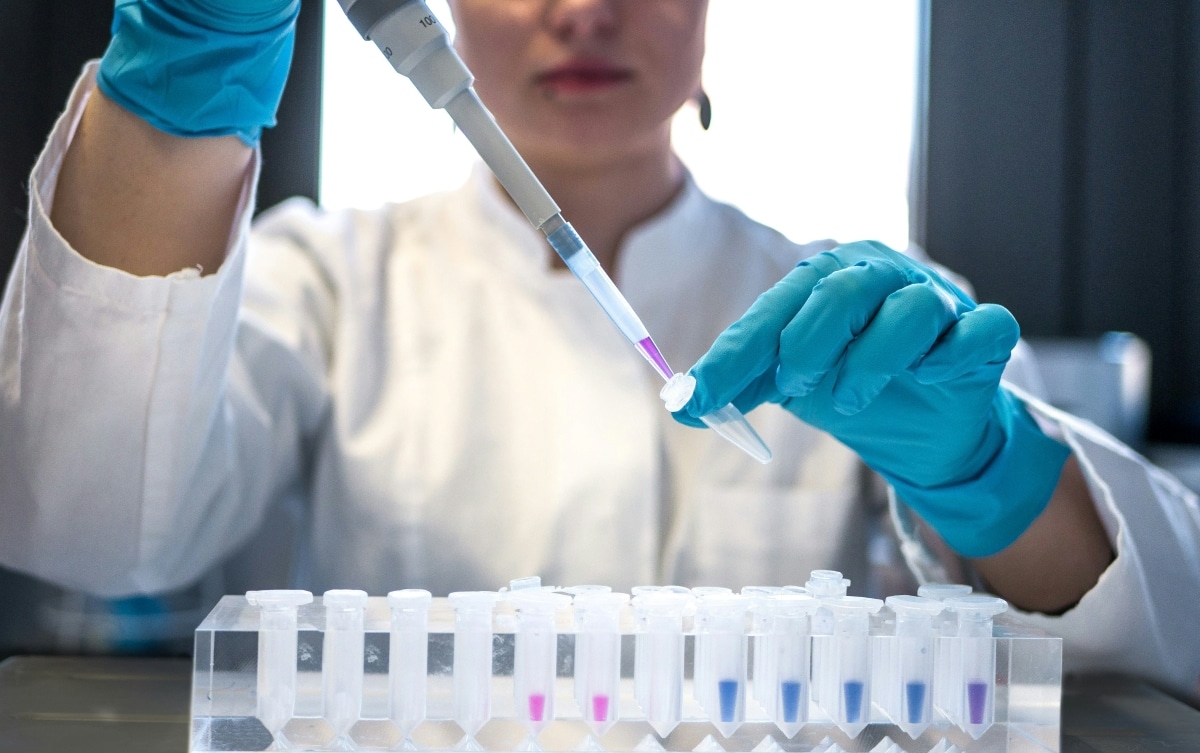
The INRS Chair in Carbohydrate Chemistry, led by Prof. Charles Gauthier, aims to position the INRS at the forefront of glycoscience applied to health. Ubiquitous in the living world, carbohydrates and their derivatives play a central role in the development of microbial infections and the modulation of the immune system, and serve as structural motifs for the development of new drugs.
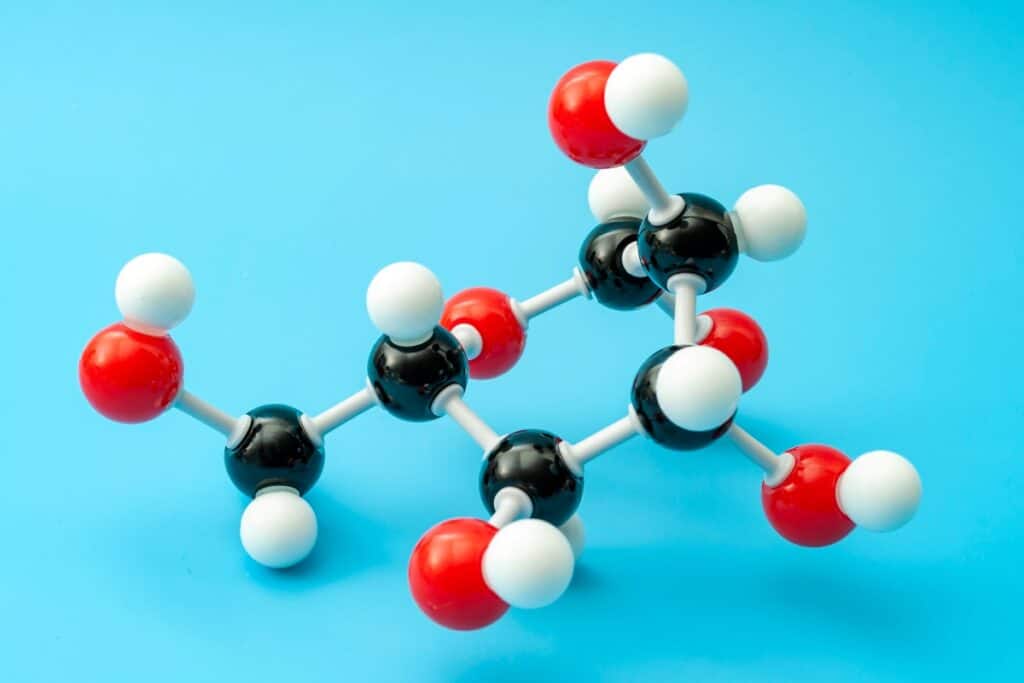
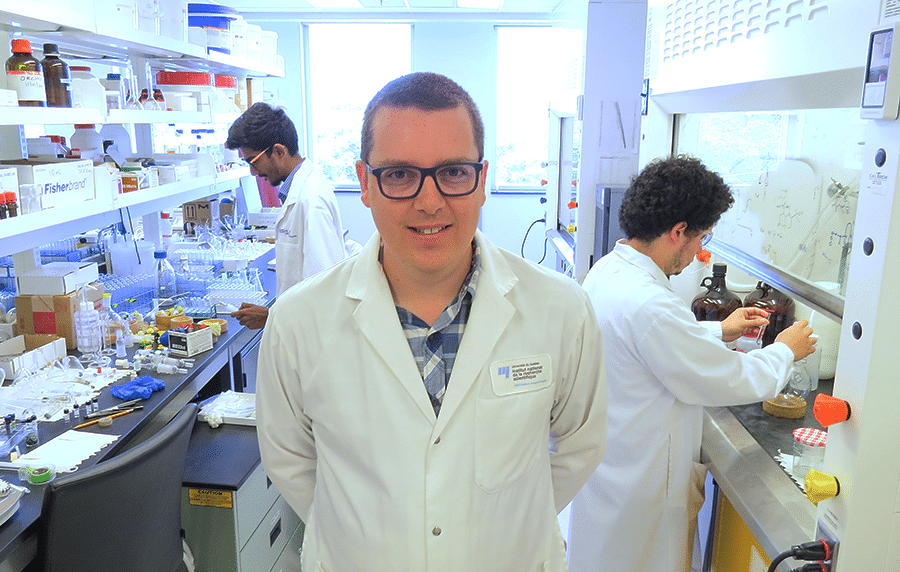
Based at the Armand-Frappier Santé Biotechnologie Research Centre (AFSB) and closely linked to the INRS-UQAC Joint Research Unit (UMR) on Sustainable Health, the Chair explores the therapeutic and biotechnological potential of carbohydrates, their derivatives, and the natural products that contain them. By combining fundamental excellence in organic synthesis with translational innovation, it makes a decisive contribution to Quebec’s pharmaceutical sovereignty and to the development of concrete solutions to global health challenges.
Holder
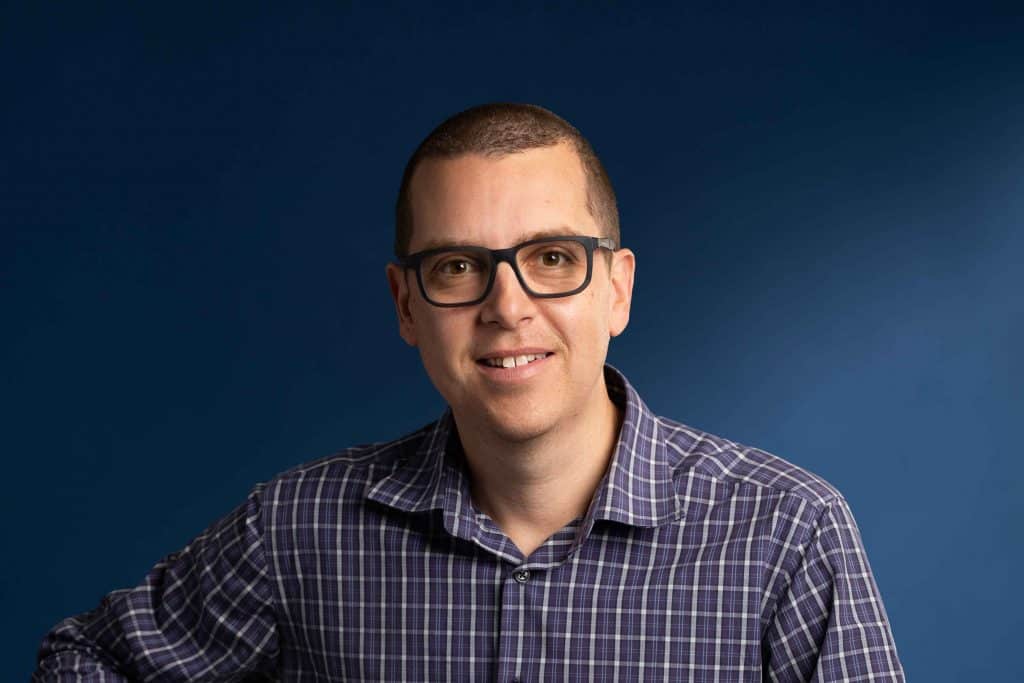
Charles Gauthier, Full Professor
- Adjunct Professor, Université du Québec à Chicoutimi (UQAC)
- Holder of the INRS Research chair in carbohydrate chemistry
Background
Despite their crucial biological importance, the unparalleled structural complexity of carbohydrates makes their purification and characterization particularly challenging. Chemical synthesis therefore stands out as the preferred alternative for obtaining pure, well-defined molecules, which are essential for the development of therapeutic and prophylactic agents.
In a global context marked by rising pandemic threats, the crisis of antimicrobial resistance, and the emergence of neglected infectious diseases, there is an urgent need to develop new molecular platforms. Furthermore, the production of certain compounds of interest, such as bio-based surfactants, is often limited by the need to extract them from pathogenic bacteria or complex biological mixtures.
The INRS Research chair in carbohydrate chemistry addresses these challenges by designing non-natural analogs and sustainable bio-based molecules. The program is firmly rooted in the “One Health” approach, which integrates human, animal, and environmental health, and leverages Quebec’s natural resources—particularly residues from the boreal forest—to drive biomedical innovation.
Objectives
The Chair’s overall objective is twofold: to advance fundamental knowledge in carbohydrate chemistry through the development of modular synthetic methodologies, and to translate these advances into concrete biomedical and biotechnological solutions.
The research program is structured around three priority thematic areas (projects):
- Preclinical development of broad-spectrum antiviral agents: Design of chimeric triterpene saponins (derived from birch bark) coupled with specific carbohydrate moieties. These molecules are designed to block the entry and spread of emerging viruses such as HIV-1, SARS-CoV-2, the dengue virus, and the Zika virus.
- Design of glycoconjugate vaccines against melioidosis: Synthesis of structural mimetics of the surface polysaccharides of the bacterium Burkholderia pseudomallei. These vaccine constructs aim to induce a protective immune response against this neglected, often fatal infectious disease, which is classified as a potential bioterrorism agent.
Development of bio-based surfactants: Discovery, total synthesis, and engineering of new glycolipids (such as ananatosides) produced by nonpathogenic bacteria (e.g., Pantoea ananatis). This research aims to establish structure-activity relationships to develop sustainable antimicrobial, anticancer, and plant-protective agents as alternatives to rhamnolipids produced by opportunistic pathogens.e, synthèse totale et ingénierie de nouveaux glycolipides (tels que les ananatosides) produits par des bactéries non pathogènes (ex. Pantoea ananatis). Ces travaux visent à établir des relations structure-activité pour développer des agents antimicrobiens, anticancéreux et phytoprotecteurs durables, en alternative aux rhamnolipides produits par des pathogènes opportunistes.
Partners and Collaborators
The Chair’s interdisciplinary and translational approach is based on an extensive network of strategic collaborations and partnerships. These alliances ensure rigorous biological evaluation, provide access to high-level containment facilities, and maximize the potential for technology transfer of discoveries.
Strategic Networks and Consortia
The Chair is at the heart of several major research infrastructures and networks that shape health and chemistry research in Quebec and internationally:
- INRS-UQAC Joint Research Unit (UMR) on Sustainable Health
- Quebec Network for Drug Research (RQRM)
- Canadian Glycomics Network (GlycoNet)
- Center for Research in Swine and Poultry Infectious Diseases (CRIPA)
- The VALIDATE Network
- Intersectoral Center for Sustainable Health (CISD)
Academic Collaborators in Quebec
- Professors Éric Déziel, Alain Lamarre, Charles M. Dozois, Charles Ramassamy, Salim Timo Islam, Laurent Chatel-Chaix, and Marie-Claude Sincennes (Institut national de la recherche scientifique)
- Professors Serge Lavoie, Jean Legault, André Pichette, Vakhtang Mshvildadze, and Catherine Laprise (Université du Québec à Chicoutimi)
- Professors Marcelo Gottschalk, Mariela Segura, Simon Matoori, Christopher Rose, and Adnane Sellam (Université de Montréal)
- Professors Steve Charette and Antony Vincent (Université Laval)
National Academic Collaborators (outside Quebec)
- Prof. Ralph Pantophlet (Simon Fraser University)
International Academic Collaborators
- Profs. Paul J. Brett and Mary N. Burtnick (University of Nevada, Reno, United States)
- Dr. Laurence A. Mulard (Institut Pasteur, Paris, France)
- Professors Stephan Dorey and Jérôme Crouzet (University of Reims Champagne-Ardenne, Reims, France).
- Professor Stéphane Vincent (University of Namur, Namur, Belgium).
- Professor Paul Kosma (BOKU, Vienna, Austria).
- Professors Antonio Molinaro and Alba Silipo (University of Naples Federico II, Naples, Italy).
- Dr. Mayri Alejandra Diaz de Rienzo (Liverpool John Moores University, Liverpool, United Kingdom).
- Prof. Narisara Chantratita (Mahidol University, Thailand).
Industrial Partners
- Biovet Inc. (development of diagnostic tools for animal health)