
- Awards and Distinctions
Awarded by the Fonds de recherche du Québec (FRQ), this prize aims to promote French‑language scientific publications in Québec and throughout the Francophonie.
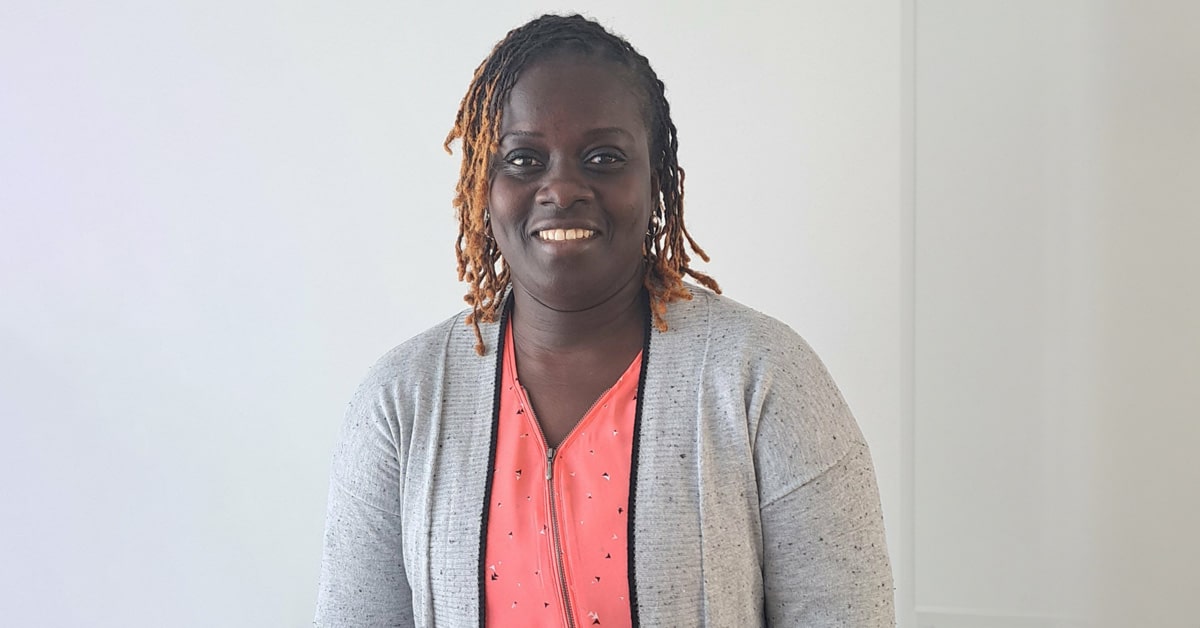
Ablema Sephora Tanoe, who holds a PhD in Water Sciences from the Institut national de la recherche scientifique (INRS), is the recipient of the Gisèle‑Lamoureux Award for French‑Language Publication for March 2026.
Before beginning her doctoral studies in Québec, she earned a master’s degree in Water Science and Technology in Côte d’Ivoire, reflecting the richness and diversity of her academic background.
She received this distinction for her article entitled “Current State of Knowledge on the Management of Vegetable Wash Water: Characteristics and Treatment.”
On this occasion, the young researcher agreed to answer our questions to explain her work and the significance of receiving recognition for a scientific publication written in French.
What is vegetable wash water, and why is it important to manage it properly?
Vegetable wash water (also known by its French acronym, ELM) refers to the wastewater generated after the washing, rinsing, and packaging of fruits and vegetables at vegetable washing facilities. This wastewater contains several contaminants that can be harmful to the environment. For example, it can contain suspended solids at concentrations of up to 10,000 mg/L, whereas concentrations as low as 25 mg/L in surface waters can lead to fish mortality due to the clogging of their respiratory systems. This highlights the need to properly treat vegetable wash water before discharging it into nearby waterways.
What are the main solutions for improving its treatment?
Treatment systems already exist on Québec vegetable farms, but they are not always sufficient to meet current discharge limits.
Our research showed that combining electrocoagulation (EC) followed by electro‑oxidation (EO) is the most effective approach for simultaneously removing insoluble contaminants (particles, suspended solids) and dissolved compounds (color, organic matter, neonicotinoid insecticides, etc.). One key advantage of EC is that it operates without the need to add chemical reagents during treatment, thereby reducing its environmental footprint.
Depending on the type of contaminant, EC or EO can also be used as a polishing treatment, in combination with existing systems already implemented on vegetable farms.
What does the Gisèle‑Lamoureux Award represent for you, as it highlights French‑language scientific publications?
I would like to thank the Fonds de recherche du Québec for this distinction. Receiving the Gisèle‑Lamoureux Award is a meaningful recognition of our efforts to enhance the visibility of French‑language scientific literature.
I also wish to thank the co‑authors of this publication for their essential contributions, as well as the Institut de recherche et de développement en agroenvironnement (IRDA) and also the Québec’s Ministry of Agriculture, Fisheries and Food (MAPAQ), which funded this project.
How can your research concretely benefit the agricultural sector and the environment?
This project was carried out in collaboration with INRS, IRDA, and the Association des producteurs maraîchers du Québec (APMQ). My research provides MAPAQ and IRDA with robust data that enable them to propose treatment solutions for vegetable wash water that are both effective and less polluting. In practical terms, these findings can help vegetable producers better comply with regulations and reduce the environmental impact of their wastewater discharges on surrounding waterways.
About the French‑Language Publication Award
This award aims to:
- promote French‑language scientific publications in Québec and the Francophonie;
- encourage open access to these publications;
- recognize the social relevance and impact of Québec‑based research.
To honour influential women in Québec’s scientific community, each FRQ sector names this award after a leading figure:
- Gisèle Lamoureux (Nature and Technologies)
- Alice Girard (Health)
- Louise Dandurand (Society and Culture)
Each month, one recipient receives a $2,000 scholarship for a French‑language publication.
Congratulations to Ablema Sephora Tanoe on this distinction!