
- My Serial Research
As the old saying goes, “all roads lead to Rome.” For me, they all led to research!
I have always loved solving problems, both at school and in my daily life. To satisfy my natural curiosity about the vast world, I have studied a broad spectrum of subjects, from dietetics to environmental biology, health sciences and biochemistry. Why limit myself to just one field?
Problems are my passion
So, although I didn’t follow a classic (more linear) academic path, all the stages of my studies all led me to one conclusion: I have a real passion for research, which was confirmed by the internships I did before my graduate studies.
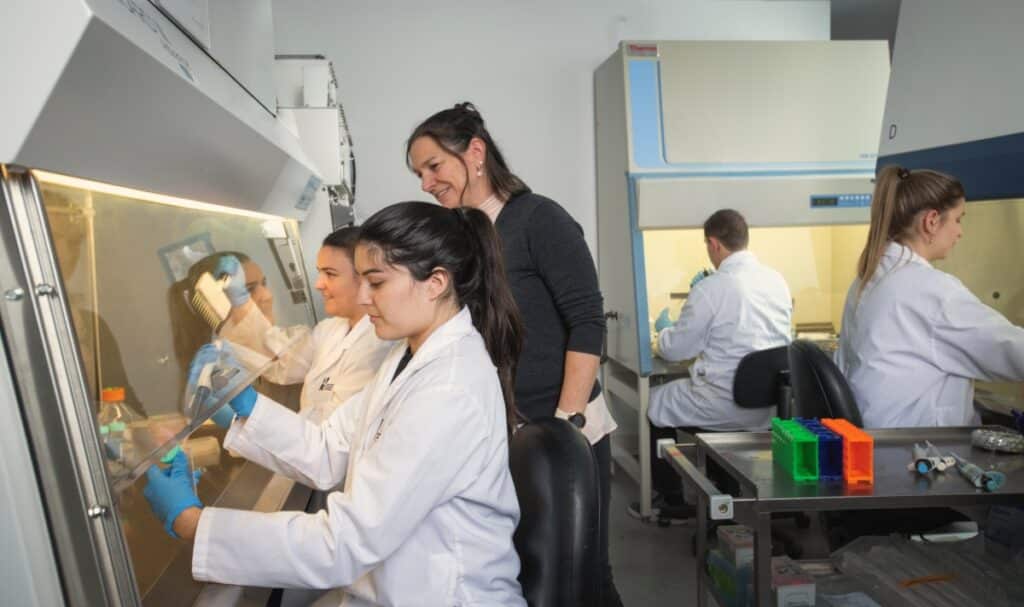
After earning a master’s degree in ecotoxicology, where my work focused on the effects of pollutants on the thyroid hormones of wild birds, and having obtained a grant from the Foncer PURE Create program (offered by the Advanced Technology Training network on the risk and remediation of Pollution in URban Environments), I was privileged to do an internship with Professor Isabelle Plante at INRS. In her laboratory, I combined my interests in the study of environmental pollutants and human health. More specifically, I studied a disease that still affects 1 in 8 women in Canada today: breast cancer.
I could now channel my penchant for problem solving into tackling a major challenge.
A PhD based on biotechnology…
Most breast cancer studies are conducted using models that require live animals. The latest studies in our laboratory involved female rats exposed to mixtures of pollutants representative of human exposure. In fact, this approach requires a tremendous amount of time and resources.
But there are other ways, and I am fortunate to be able to explore them as part of my PhD. I am studying different in vitro models based on cell lines to test the toxicity of pollutants and other compounds known or suspected to be endocrine disruptors. This work is made possible by the technological resources that INRS offers.
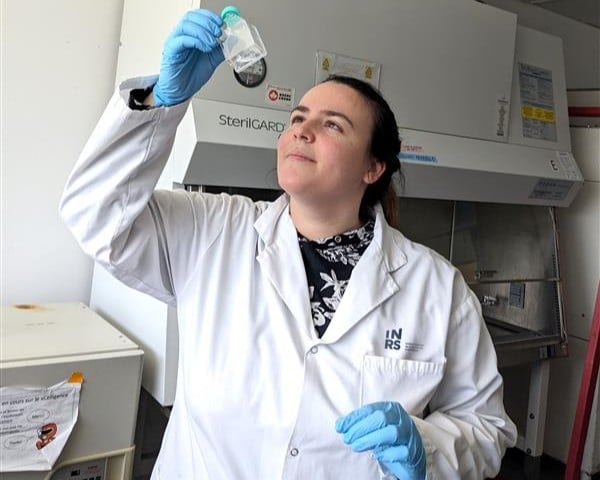
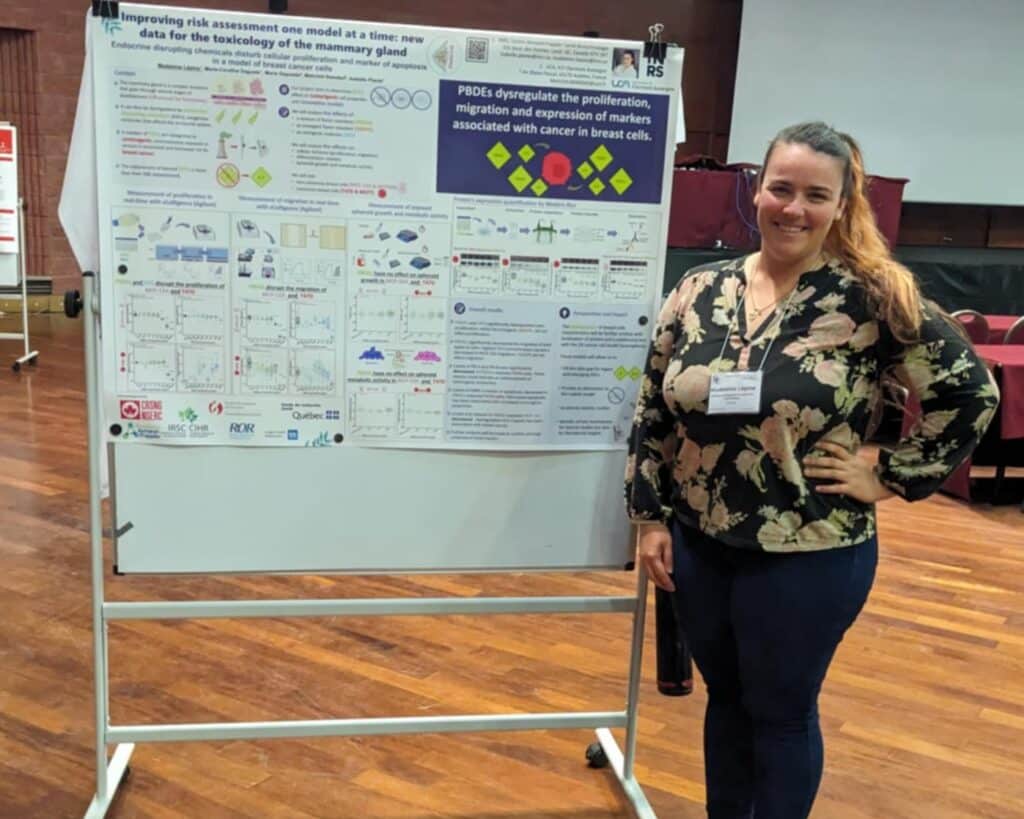
During my first year, I learned about a device that can measure the effects of pollutants on the ability of cells to multiply, a behaviour associated with the development of cancer. We used this device to test a large number of pollutant concentrations in the lab, which made assessing the toxicity of these compounds a much quicker process. The idea is, by better understanding how toxic certain substances or environments are, we can seek to limit or avoid exposure in order to reduce the risk of cancer developing, worsening, being misdiagnosed, or not responding adequately to treatment.
… rooted in reality…
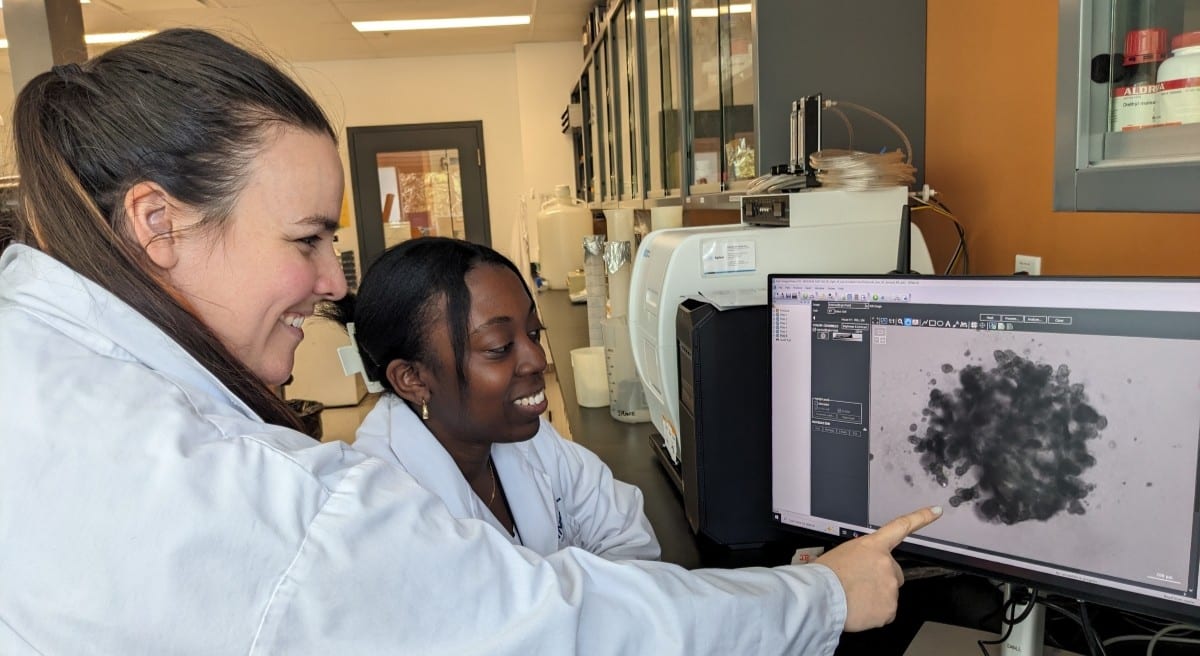
In addition, thanks to partnerships and relationships forged by INRS and my director, I was able to spend time collaborating in the laboratory of Professor Mahchid Bamdad at Clermont Auvergne University in France. There, I learned how to use a new 3D cell model to more accurately reflect the cellular mechanisms found in the body. In short, through a series of rotation steps and the use of a hydrogel, we are able to recreate artificial tumors based on cancer cells, called tumorspheres. These spheres provide a 3D environment that is more representative of real tumors. I am using these more realistic models to the fullest, to better understand how pollutants affect the risk of developing breast cancer.
…and human-centred
With my research, I hope to open the door to the study of endocrine disruptors by using the 3D model to accelerate the assessment of their toxicity.
In doing so, I hope to enable more researchers to contribute to the publication of data on these toxic effects, leading to better government regulations in Quebec and internationally.
Ultimately, I hope to help protect more women from the risk of developing breast cancer.

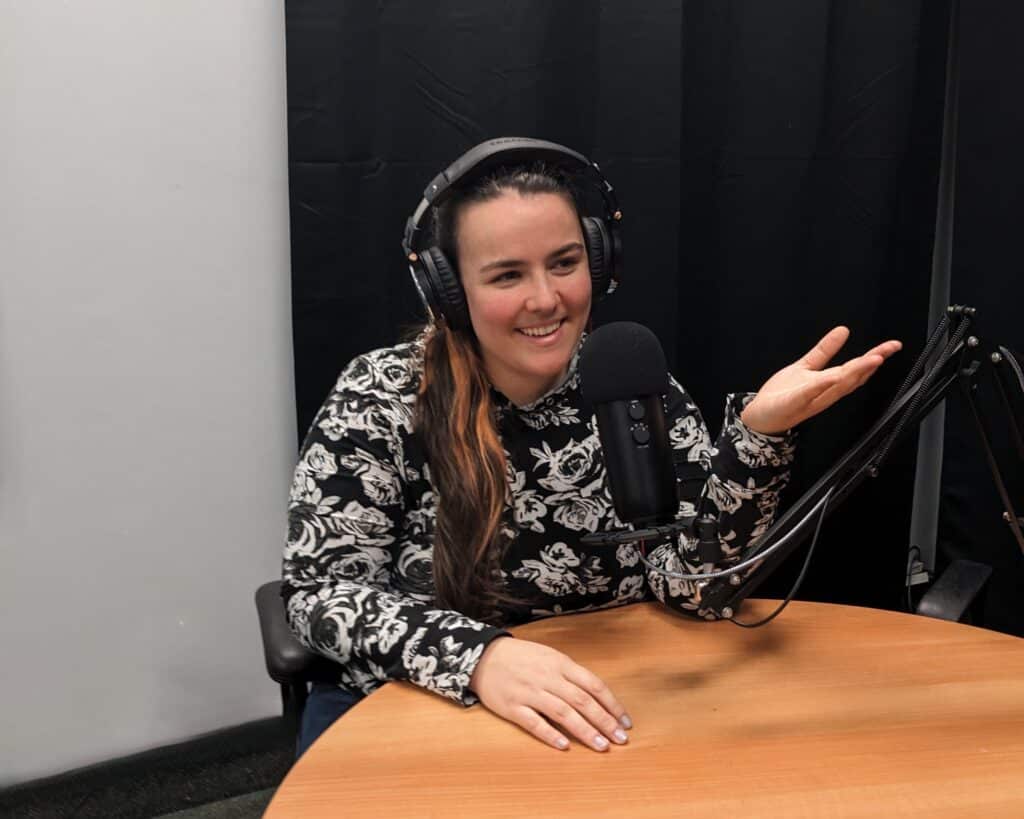
At the tender age of 14, Madeleine was already advocating against pollution and environmental injustices at her high school. Having preserved her passion for awareness raising, she can be rightfully proud of the doctoral researcher she is today.
Listen to Madeleine talk about her research in the PerturbAction podcast, a student initiative aimed at popularizing the topic of endocrine disruptors.