
- Overview
The series “A Quick Overview in Three Questions” highligts research in all its forms and offers an informed perspective on current issues.

Professor Mischa Young, an expert in urban planning, focuses on new transportation technologies and the future of urban mobility. Whether analyzing the movement of people or the delivery of goods, he examines the massive arrival of alternatives that have transformed how we move around cities, such as Uber and Lyft, as well as electric bikes and scooters.
These technology‑enabled options sometimes compete directly with public transit—without mentioning the safety, inequality, precarity, and regulatory challenges associated with some of these innovations.
As debates surrounding the development of public transit take center stage, we spoke with Professor Young to better understand the contemporary issues shaping mobility today.
In recent years, new technologies have transformed transportation options in urban areas. Think of Uber, which forced a paradigm shift for taxis. What risks and opportunities do companies like Uber represent for public transit?
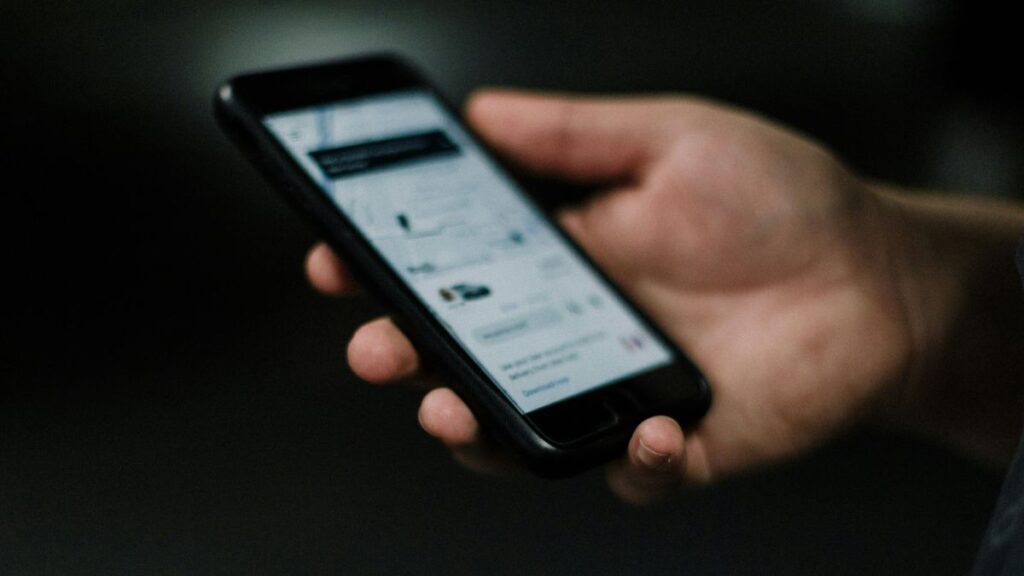
Since their controversial arrival in Canada in 2012, commercial ride‑hailing services such as Uber and Lyft—and their impacts on our transportation systems—have fueled extensive media debate. Now present in more than 140 municipalities across the country, these services indeed pose a threat to public transit agencies by drawing away part of their ridership.
In Toronto, for example, more than one‑third of Uber trips are considered substitutes for public transit (Young and Farber, 2020). In addition to contributing to urban congestion, this decline in demand has deeper consequences: reduced revenue for public transit services, which may then be forced to cut service, penalizing users who continue to rely on collective transportation.
That said, my research shows that a significant share of Uber trips occur in areas or at times of day when public transit service is insufficient and where traveling by car is considerably faster. In such cases, ride‑hailing services can play a complementary role by improving access to the broader public transit network.
Several public transit agencies are exploring—or have already implemented—partnerships with companies like Uber and Lyft. The success of these collaborations varies depending on the type of service offered, but above all on the level of demand. These services often attract more users than expected—a phenomenon known as induced demand, in which improving supply increases demand—without generating the same economies of scale as traditional public transit. In other words, as demand grows, more cars are needed, which worsens congestion and raises operating costs. By contrast, increased demand on a bus line allows agencies to add vehicles, improve frequency, and spread costs across a larger number of riders.
Given these potential effects, cities must consider how to design appropriate policies and regulations to frame these new modes of transportation and ensure they align with our equity and sustainability goals.
These transportation innovations and the rapid rise of online shopping have transformed our lifestyles, our jobs, and our cities. What are your observations on the ground regarding online shopping and road congestion?
The COVID‑19 pandemic and subsequent lockdown measures led to a sharp increase in online shopping. My research shows that the number of people making online purchases at least once a week nearly quintupled between fall 2019 (11.6%) and spring 2020 (51.2%). This percentage has slightly decreased since then but remains well above pre‑pandemic levels.
This surge in online shopping has significant effects on our travel behavior. By shopping online, we have less need to go to stores, which reduces demand for public transit for home‑to‑store trips, as well as car trips, thereby helping to reduce urban congestion.
However, for these purchases to reach our doorsteps, they must be delivered. Delivery trucks such as FedEx or UPS are commonly used for this final step, known as the “last mile.” By consolidating multiple deliveries, this approach promises to reduce congestion and emissions, but in practice, this is not always the case.
Due to a lack of dedicated delivery spaces, these trucks are often forced to double‑park or block bike lanes and sidewalks. These behaviors—partly linked to delivery workers’ pay structures, which reward speed and high delivery volumes—endanger pedestrians and cyclists and contribute to road congestion.
Another factor to consider is the much higher return rate for online purchases compared to in‑store purchases. This high rate of returns generates additional trips that likely would not have occurred otherwise, further increasing road congestion.
In short, the rise in online shopping has clearly reduced demand for public transit for home‑to‑store trips, but its effect on road congestion remains uncertain. The lack of parking spaces for delivery vehicles, combined with high return rates, limits the potential benefits of reduced car trips to stores.
What technologies await us in the near future, and how will they change our cities? Just as Uber disrupted the transportation world, are there other upcoming revolutions that will reshape our habits?
Many emerging trends will undoubtedly disrupt our daily lives. Among them, one development I am closely monitoring in urban mobility is the growing competition between pedestrians and technologies encroaching on pedestrian space.
This includes forms of electric micromobility such as bikes and scooters, whose popularity has surged in recent years. Despite regulations aimed at limiting their use on sidewalks, they are frequently found there, creating clear challenges for coexistence among different users. My research shows that in urban contexts, about 10% of trips by bike or electric scooter occur on sidewalks—yet this figure drops by more than half when a bike lane or other dedicated infrastructure is available.
These results suggest that micromobility users do not necessarily choose sidewalks by preference, but rather because they do not feel safe on the available road infrastructure. In this context, sidewalk use should not be viewed solely as a punishable behavior, but also as an indicator of unsafe cycling conditions and a tool for identifying areas that require safety improvements.
Another rapidly emerging technology that may also change our habits is autonomous delivery robots. These devices are increasingly seen as a solution to the “last mile” challenges associated with online shopping, a sector that continues to grow year after year. However, in an effort to reduce delivery costs and meet consumers’ expectations for ever‑shorter delivery times, these robots risk introducing new forms of privilege and marginalization. In cities where they have already been deployed, safety issues for pedestrians have been reported.
Thus, broader adoption of delivery robots could become a widespread problem for pedestrians. It is therefore crucial to closely monitor this competition for pedestrian space and collect new data to better understand the potential challenges associated with deploying these technologies in our cities.