
Project description
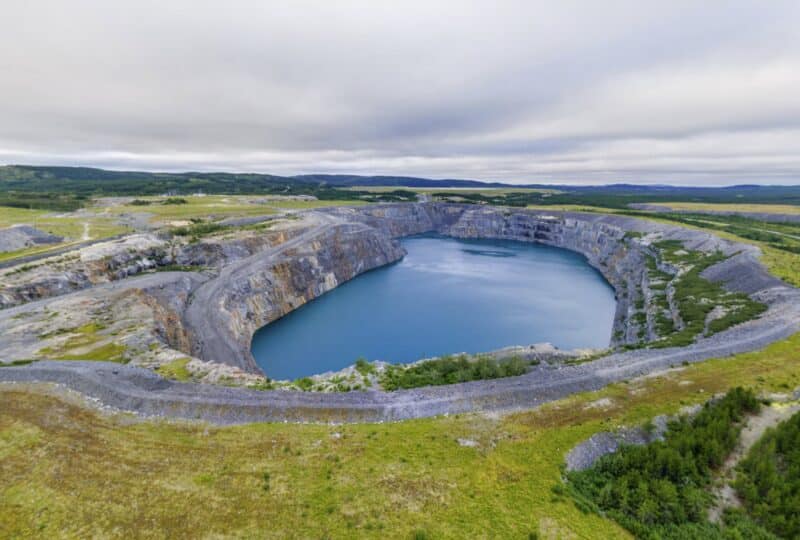
The Troilus deposit is a major copper–gold resource located in the eastern portion of the Archean Frotet-Evans greenstone belt, northern Québec. The deposit is made up of four zones (J, Z87, X22, SW) that are hosted in a complex package of volcanic, volcaniclastic, sedimentary, and intrusive rocks dated around 2.79 Ga. Mineralization mainly consists of a combination of disseminated pyrite, chalcopyrite, and pyrrhotite (±sphalerite), and auriferous veins. Alteration ranges from biotite- to sericite- to sodic and calcic-rich assemblages. Some parts of the deposit show strong Au/Cu zoning—especially the SW zone—but the controls on this variability are still unknown.
The entire deposit has been deformed and metamorphosed to upper greenschist–amphibolite facies. Although current models propose bedding (S0) parallel to the NE-oriented structural grain, the overall architecture, age relationships, and younging directions of the volcanic units remain unclear. Some rock types also have uncertain origins and could be either intrusive or extrusive. The intrusive complex itself includes several generations of dykes with poorly understood relationships. This geological complexity explains why Troilus has been interpreted through different metallogenic models (orogenic, porphyry-like, synvolcanic/hybrid).
This M.Sc. project aims to resolve this complexity. By producing a detailed lithofacies map, conducting robust geochemical and geochronological analyses, and characterizing the mineralization and its alteration footprint, the study will significantly improve our understanding of the Troilus system and support exploration, production, and metal recovery strategies.
The project is part of a major Geological Survey of Canada initiative on gold and copper and will be carried out in close collaboration with Troilus Mining Corporation. It will also complement ongoing work by several academic and government partners (UQAM, UQAC, MRNF, and Western University).
Start date
Possibility of employment during summer of 2026 with Troilus Mining Corporation, a Canadian development-stage mining company. Official M.Sc. starting date is for the fall session of 2026.
Research supervision
Supervision: Jean-Luc Pilote, Geological Survey of Canada research scientist and INRS adjunct professor
Co-supervision: Pierre-Simon Ross, INRS Professor
Pierre-Arthur Groulier, Troilus senior geoscientist
Study program
MSc in Earth sciences (program details in French only)
Eau Terre Environnement Research Centre, INRS
Funding
INRS offers financial support to all its students.
Required qualifications
- Degree in Geology, Earth Sciences, or Geological Engineering (from a recognized University or College)
- Curious, motivated, independent, and with a strong academic background
- Interest in projects in the field of economic geology
- Able and interested to work in the field in a mining environment
To apply
Please use the form below to submit your application including the following documents in PDF: 1) cover letter, 2) CV including two references, 3) university transcript.