
- Academic Life
Professor Frédéric Veyrier spent six months at Institut Pasteur in New Caledonia supervising a genomics research team.

Nouméa, Nouvelle-Calédonie. Photo : Adobe Stock
During his recent six-month posting to the New Caledonian capital of Nouméa, Professor Veyrier officially launched a new research group for the study of tropical diseases. Professor Veyrier is a genomic bacteriology specialist and has been collaborating remotely with his counterparts and fellow Pasteur Network members at Institut Pasteur de Nouvelle-Calédonie (IPNC) for three years now. Funding for the trip included a Calmette & Yersin grant from Institut Pasteur for Pasteur Network scientists.
“This trip was a great opportunity to strengthen the ties we’d established,” said Professor Veyrier. “What really amazed me was the blend of expertise on the team, both in basic and applied research.”
Frédéric Veyrier, professor in Genomic bacteriology and evolution
Research on endemic diseases across borders
Professor Veyrier’s research looks at a number of diseases caused by bacteria, such as leptospirosis, which is spread to humans by rodents and other wild and domestic animals. Although it occurs worldwide, the disease is more common in tropical regions. In New Caledonia, it’s endemic. Professor Veyrier’s work also looks at the evolution of antibiotic resistance in such bacteria as Haemophilus influenzae and Neisseria gonorrhoeae.
“Although some of these diseases are found in both Canada and New Caledonia, the strains and their forms of antibiotic resistance aren’t necessarily the same,” he explained, speaking near the end of his stay in New Caledonia. “By comparing different regions, we gain an ever deeper understanding of a disease, as well as how to fight it.”
For him, Centre Hospitalier Territorial Gaston-Bourret (CHT), with its direct connection to Institut Pasteur de Nouvelle-Calédonie (IPNC), was extremely important, giving him direct access to a medical department and diagnostic laboratories.
New Caledonia is also something of a special case in the study of certain diseases. The French territory is a South Pacific archipelago comprising many dozens of islands that, compared to the rest of the world, has been relatively unaffected by mass tourism. The import-export economy also remains modest and is notably well controlled, including trade in antibiotics. The ecosystem is less complex, and certain bacteria have evolved in unique ways owing to island effects. That makes the study of antibiotic resistance there of particular interest.
Advancing research by pooling knowledge
Professor Veyrier’s stay in Nouméa has led not only to advances in research, but also to lasting links between research teams at the two institutions.
A master’s program is being discussed by INRS and the University of New Caledonia that will allow New Caledonian and Québec students to freely move from one institution the other when research needs dictate.
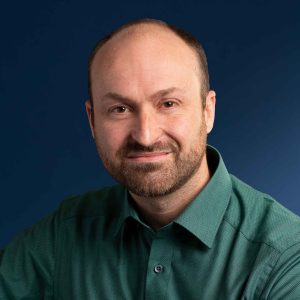
“We want everyone to keep working together in the future,” said Professor Veyrier. “Our initiatives are designed to catalyze research and strengthen our ties—personal as well as scientific. I see that as essential to group cohesion, despite the distance.”
Frédéric Veyrier, professor in Genomic bacteriology and evolution
Professor Veyrier also took advantage of his relative proximity to Australia by lecturing there, first at the Doherty Institute for Infection and Immunity in Melbourne, then at the University of Sydney and at Brisbane’s University of Queensland. Yet another opportunity to promote Québec research internationally and broaden the circle.
Research internships: On the road for doctoral work
Eve Bernet is a doctoral student on Professor Veyrier’s team who also had the opportunity to spend time at Institut Pasteur de Nouvelle-Calédonie (IPNC), completing a three-month research internship with support from a Pasteur Network Calmette & Yersin grant. It was a tangible way for the two institutions to start collaborating closely.
“At INRS, the scientists are all more specialized. It’s about basic research,” said Eve Bernet. “IPNC is more into field research, looking to solve the problems of the day with a strong patient and hospital connection. The different ways of relating to the profession and time horizons really enrich our discussions and teamwork opportunities.”
Eve Bernet, doctoral student in microbiology