
- Overview
The series “Tour d’horizon en trois questions” highlights research in all its forms and takes an informed look at current events.
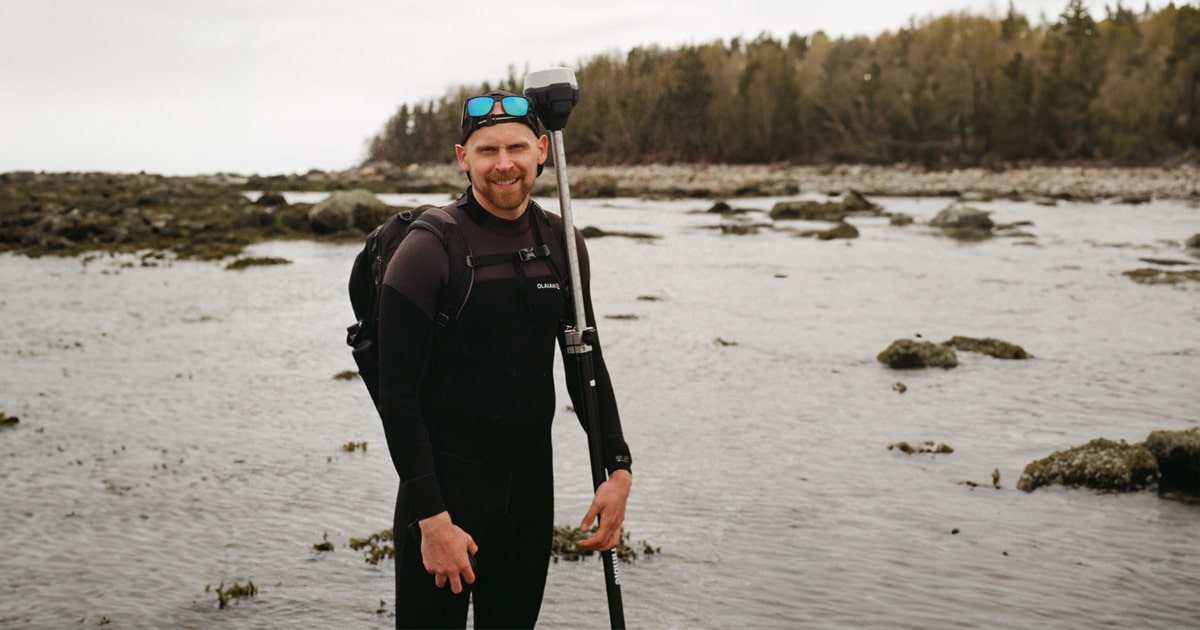
Professor Jacob Stolle
Each year, as ice retreats, coastlines reveal just how much they are changing — season by season, and over decades. In Quebec and across Canada, coastal erosion is no longer a distant or isolated phenomenon. Its impacts extend beyond shoreline communities and increasingly affect transportation networks, infrastructure, and public safety. The scale of the challenge has led the Ministry of Transport to launch a regional program of 74 projects over 10 years to protect roads most at risk. Can science help reduce coastal erosion and support more sustainable, long‑term solutions?
Jacob Stolle, Professor at INRS, expert in coastal and river hydrodynamics, and Scientific Director of the Environmental Hydraulics Laboratory (EHL), sheds light on the forces reshaping our coastlines and on the strategies that can help communities adapt.
Why are coastlines eroding in Quebec and Canada, and where do we stand today?
Coastal zones are naturally dynamic environments. Erosion and sediment movement are ongoing processes that shape shorelines over time and vary with the seasons. Powerful winter storms tend to narrow beaches by pushing sediments offshore, while calmer summer conditions can allow some of those sediments to return, partially rebuilding the shoreline.
Problems arise when critical infrastructure — such as highways or urban areas — is built close to the coast. In these cases, societies attempt to fix a shoreline that is, by nature, constantly shifting, creating tension between natural processes and human development.
Climate change is further intensifying these dynamics. Rising sea levels across Canada are pushing coastlines inland, while changing storm patterns are increasing erosion risks. In Quebec and the Canadian Arctic, sea ice once played a key protective role during winter storms. As temperatures rise and ice cover declines, stronger storms are now reaching coastlines directly, accelerating erosion.
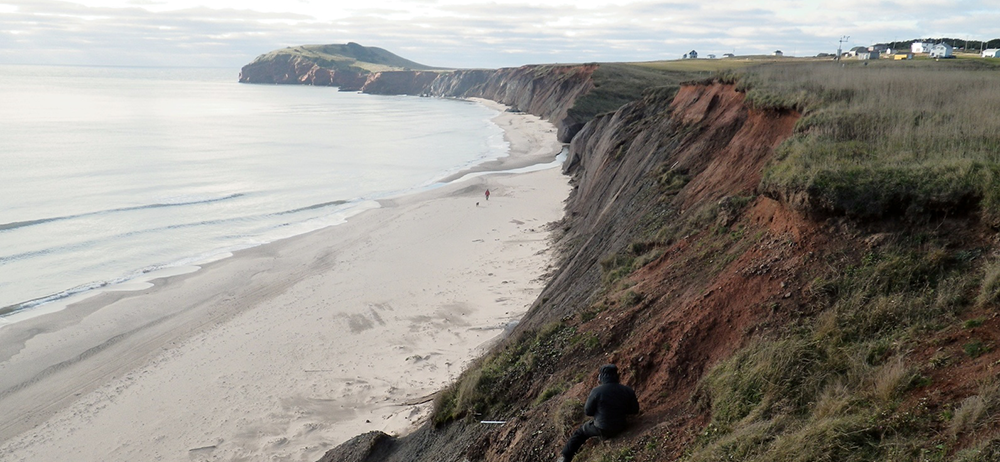
Over the past two decades, southern Quebec has lost an average of about half a metre of coastline each year to the St. Lawrence River — a rate expected to increase. That said, erosion does not affect all areas equally. Local geography, shoreline composition, storm exposure, and existing infrastructure all influence how vulnerable a community may be. What is certain is that climate change will continue to amplify risks along the coast.
What happens if no action is taken, and how urgent is the situation?
For those who experience coastal regions mainly as vacation destinations, shoreline change can be hard to perceive. Yet for coastal residents, erosion threatens homes, livelihoods, transportation routes, cultural heritage, and ecosystems. It also places considerable psychological strain on communities facing persistent uncertainty about their future.
Quebec has one of the longest coastlines in the world — longer than most countries — and many key transportation routes run alongside it. Roads such as Routes 132 and 138 are essential lifelines for large regions, supporting emergency services and the movement of goods and people. A major storm on the North Shore, for example, could cut off entire communities at the moment when access is most critical.
Coastal erosion typically unfolds gradually, often going unnoticed until it reaches a tipping point. As shorelines retreat, infrastructure weakens and the risk of flooding increases. Given the vast extent of Quebec’s coastline, responses are frequently reactive, implemented only once conditions become critical. Yet delaying action reduces future options, as coastlines continue to evolve.
What solutions show the most promise, and who needs to be involved?
Adapting to coastal erosion involves a range of approaches, from “soft” solutions — such as land‑use planning, policy tools, and ecosystem restoration — to “hard” engineering measures like rock armouring and dikes. While the goal is always to strengthen coastal resilience, solutions must be tailored to local contexts. Social priorities, economic realities, and environmental conditions vary widely from one community to another.
Natural forces such as waves, tides, and storms cannot be eliminated. Coastal infrastructure is designed not to stop these forces, but to manage and reduce their impacts. Early intervention is crucial: much like braking a car, gradual action taken in advance is far more effective than sudden measures applied at the last moment. The prevalence of emergency responses helps explain why many existing interventions rely on hard infrastructure — once the shoreline moves too close, choices become limited.
At INRS, research teams are working to expand the range of options available to decision‑makers. At the Environmental Hydraulics Laboratory (EHL), home to the largest wave flume in North America, scientists can replicate coastal conditions representative of Quebec and test innovative approaches to coastal protection and flood mitigation.
In collaboration with Professor Anne Ola, researchers are working with the Ministry of Transport on the North Shore to develop hybrid solutions that combine traditional infrastructure with nature‑based approaches, such as salt‑marsh restoration. In the Magdalen Islands, partnerships with Professor Saeid Homayouni and private‑sector collaborators, including Lasalle NHC, focus on improving shoreline monitoring and risk assessment tools in a changing climate. INRS researchers also work closely with non‑profit organizations, including the ZIP Saguenay–Charlevoix Committee, to track the long‑term performance of restoration projects and refine predictive models. Together, these initiatives reflect a commitment to solutions grounded in science and adapted to the realities of coastal communities.